Download the 2026 Frontline Enablement Report
See exactly where your programs stop working — and what to do about it.
Just Launched | Flagship annual research
Your best and worst locations have the same training programs. The gap between them isn’t talent. It’s whether learning is translating into execution.
The 2026 Frontline Enablement Report reveals where the gap between learning and execution opens up — and why the same programs produce different results depending on where they land.
Built on responses from 1,594 frontline employees, managers and corporate leaders, this report identifies the systemic gaps between what L&D builds and what the frontline actually executes — and what those gaps are costing in performance, consistency and business results.
Closing those gaps doesn’t require more programs. The enablement infrastructure to support them is what’s missing.
Download the 2026 Frontline
Enablement Report
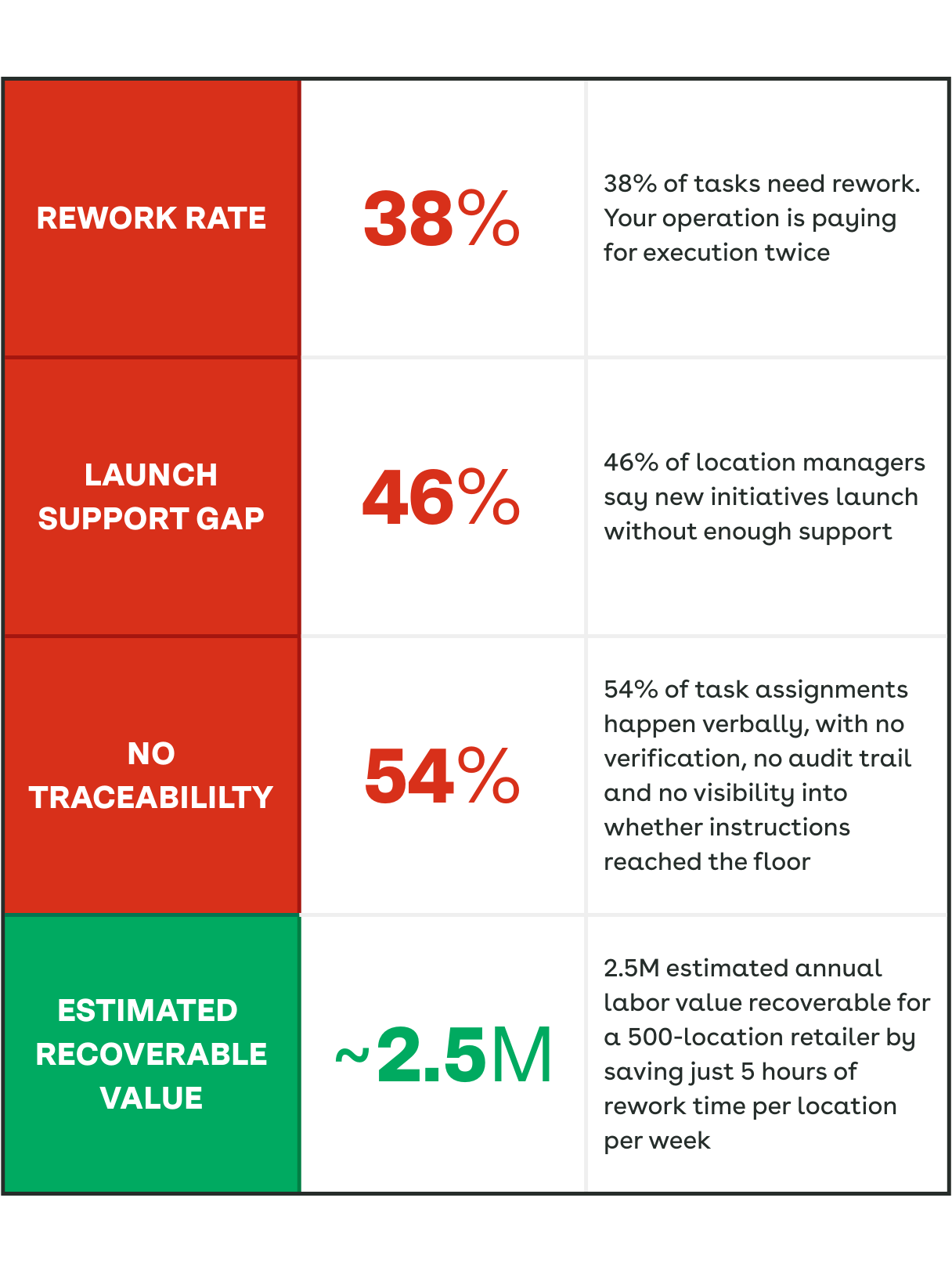
The learning-to-execution gap is real
Your best and worst locations have the same strategy. The same products. The same promotions. The same training programs. One of them is performing. The other is re-executing — doing the same work twice, losing margin on every shift, delivering an experience that doesn’t match what the program was designed to produce.
The problem isn’t the training. Your programs are landing. It’s whether the enablement infrastructure around them is built to let people execute consistently — location to location, shift to shift, launch to launch.
What’s driving the gap:
None of these are people problems. They’re enablement infrastructure problems. And they’re recoverable.
What the 2026 data reveals
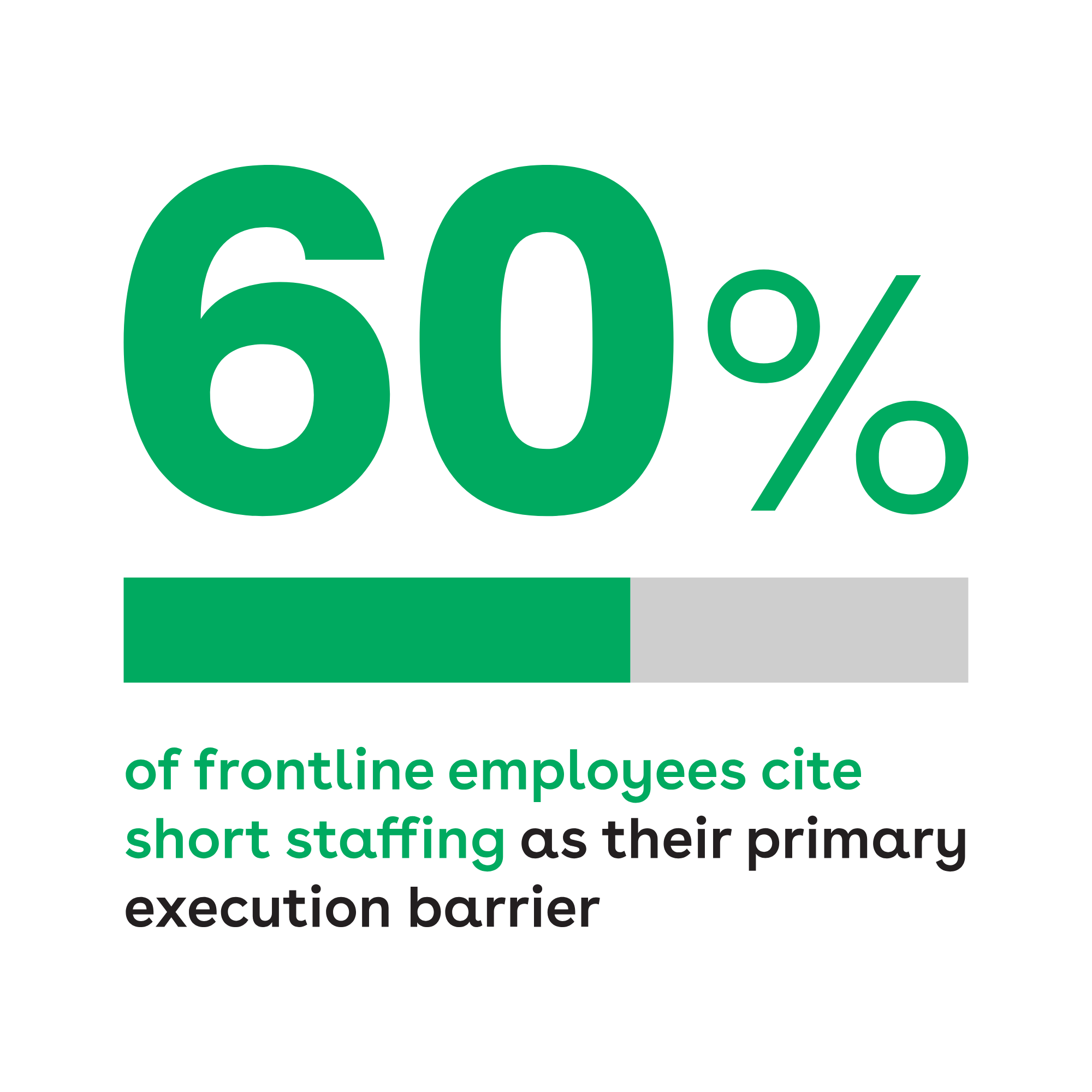
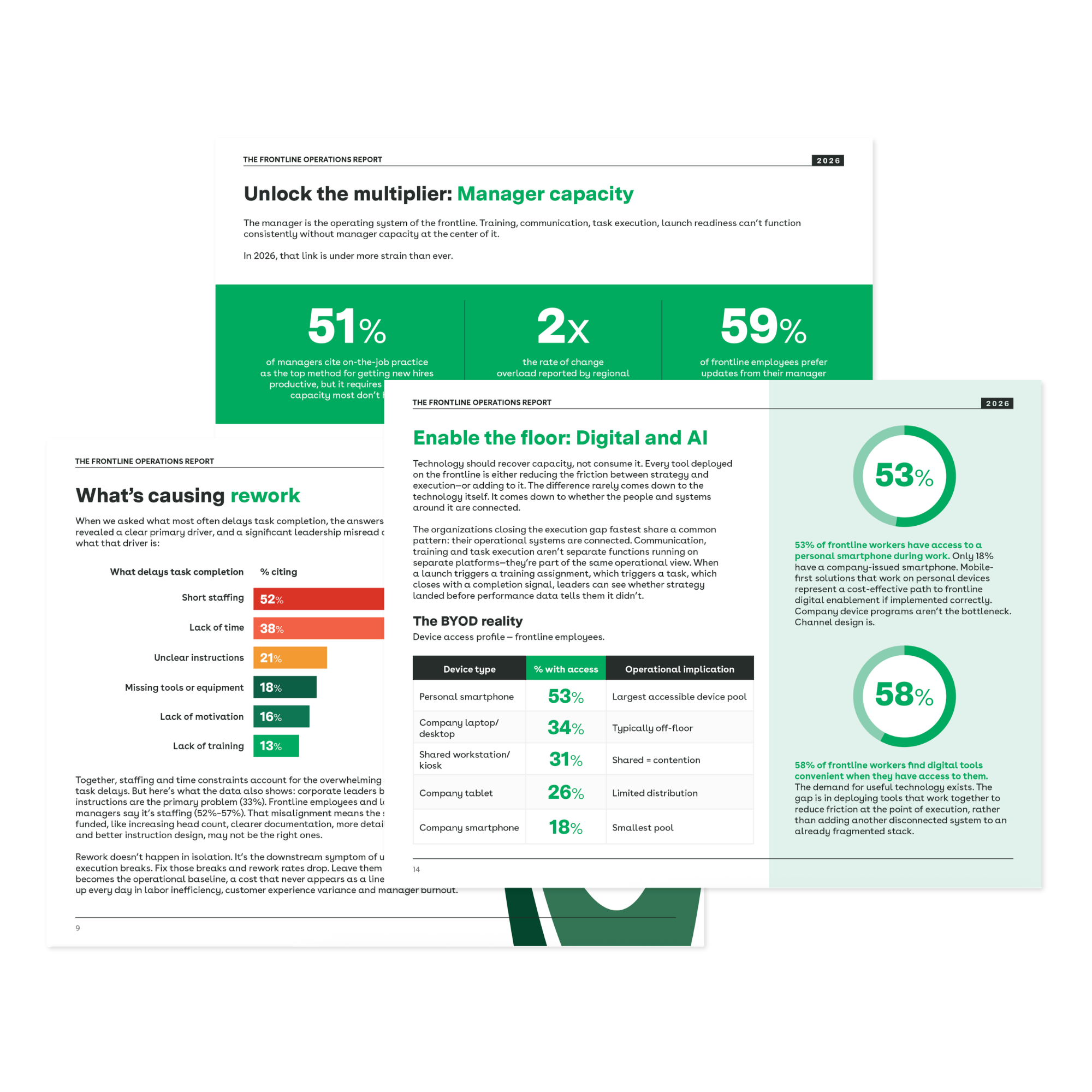
60% of frontline workers cite short staffing as their primary execution barrier, but only 35% of corporate leaders say the same. Leadership is 25 to 33 points more optimistic about frontline conditions than the people doing the work — across every metric in this report.
That gap shapes every resource decision made from headquarters, including decisions about learning investment. You can’t close a gap you can’t see at the right scale.
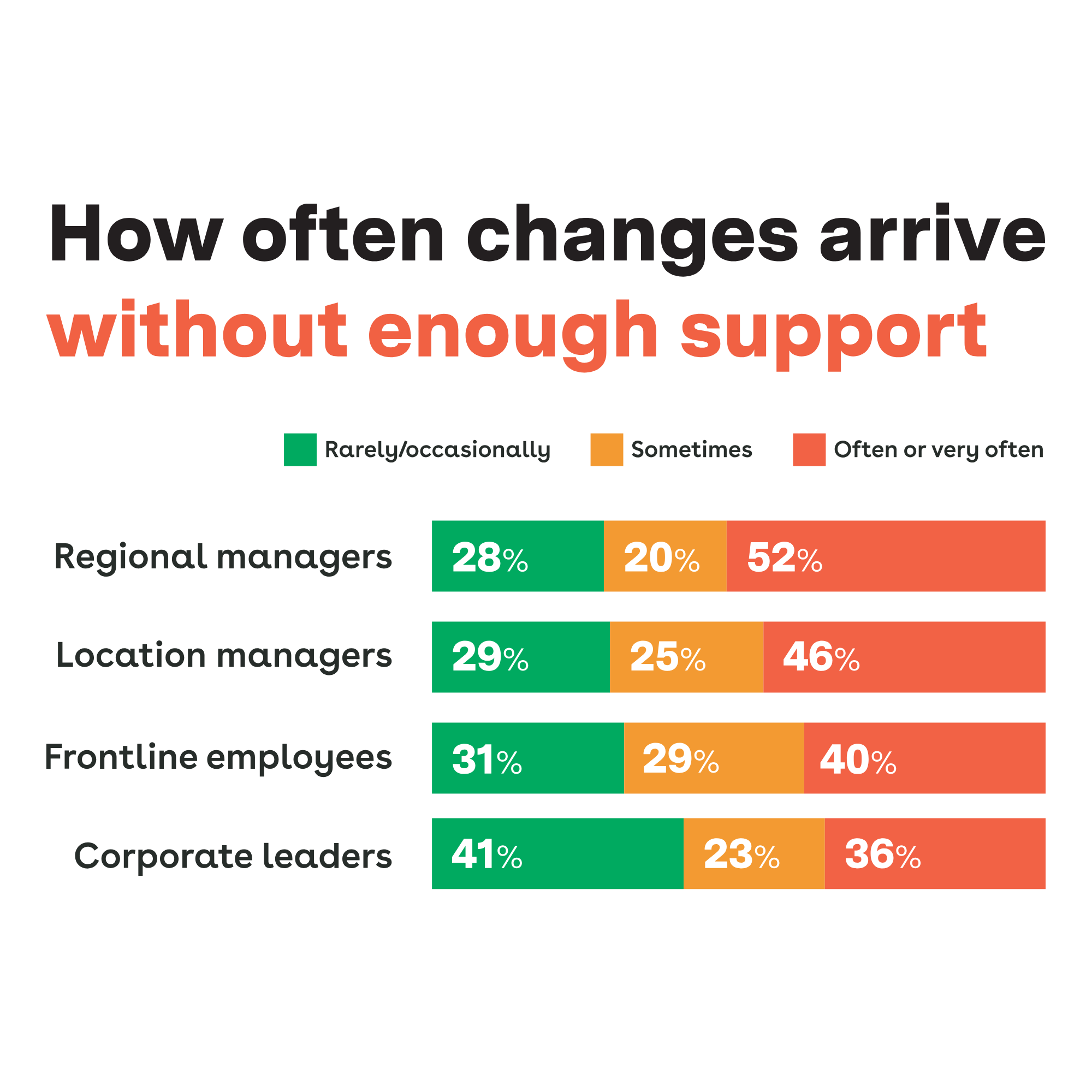
46% of location managers say new initiatives arrive without adequate support to execute them well. Launch readiness and training are the first casualties when capacity runs out — and every program you invest in is paying the price.
Each launch that lands poorly makes the next one harder. Trust erodes. Workarounds become standard. A promotion designed to drive 8% comp sales that executes well in 65% of locations isn’t delivering 8%. It’s delivering a fraction of it, unevenly, while the window to course-correct has already closed.
87% of managers say they communicate updates effectively. Only 56% of frontline workers agree. That 31-point gap is where strategy becomes inconsistency: shift by shift, location by location.
59% of frontline workers prefer hearing updates directly from their manager. Communication strategies that bypass that channel, or treat managers as just another distribution point, are strategies that don’t reach the floor.

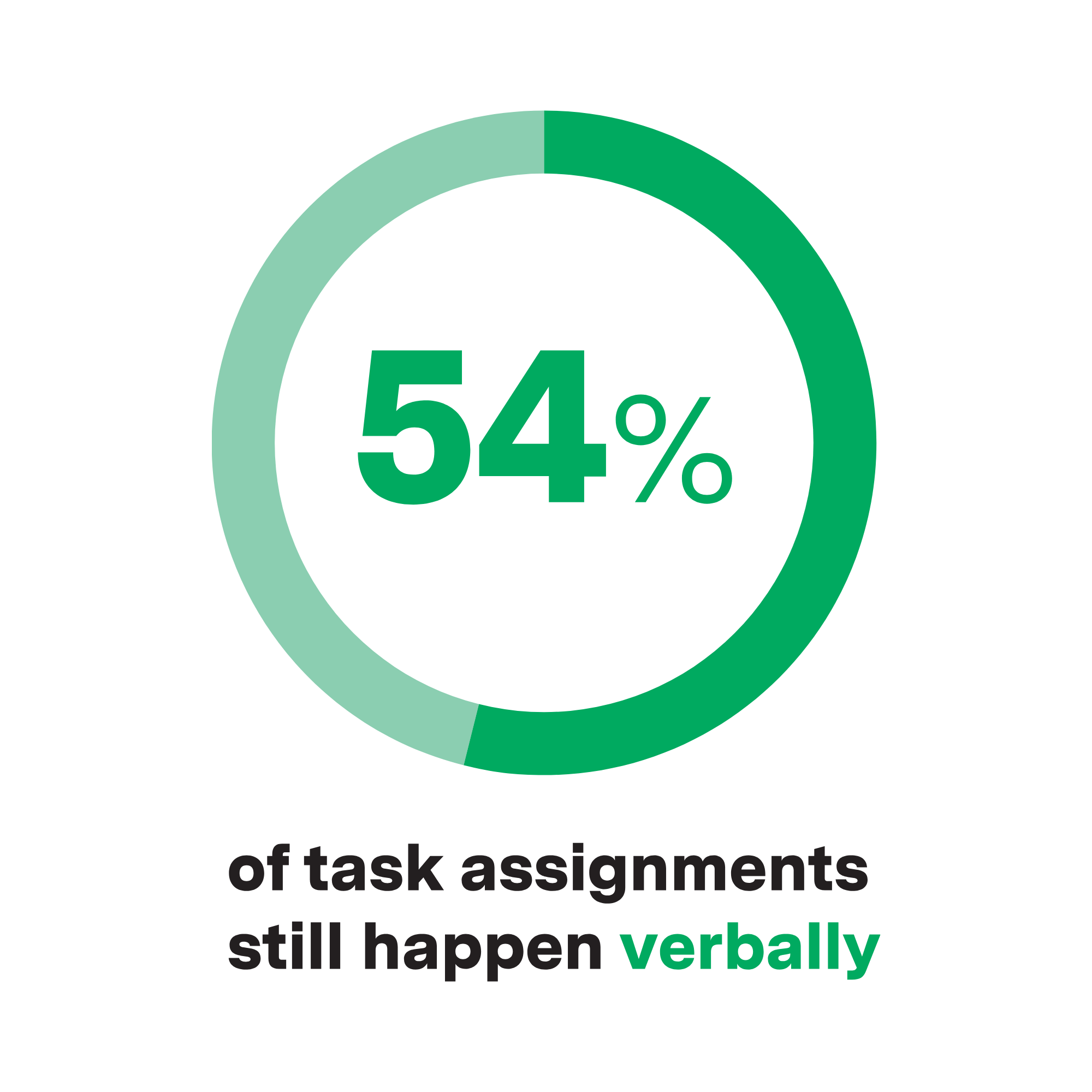
54% of task assignments still happen verbally with no verification, no audit trail, and no visibility into whether instructions reached every person they needed to reach. The same initiative can land 10 different ways across 10 different locations, and headquarters won’t know which version is running until it shows up in performance data.
Fragmented systems and limited tools create a strategy problem, not just an IT one. The organizations closing the execution gap fastest are connecting the tools they have and making them smarter.
59% of frontline workers rely on their manager as their primary communication channel — but managers are stretched beyond coaching capacity. Coaching capacity, not course catalog depth, defines whether learning translates to behavior on the floor. The top three training methods that actually get teams productive faster — on-the-job practice, manager coaching, peer support — all depend on a manager with time to make them happen.
When managers have the time, tools and support to lead instead of cover gaps, every other metric in this report improves. When they don’t, training disappears from the floor, not the plan.

Performance still varies significantly from location to location, shift to shift, launch to launch and that variance has a measurable cost.
For a 500-location retailer, recovering just 5 hours of rework per location per week returns roughly $2.5 million in labor value annually. 34% of that rework traces back directly to unclear instructions and insufficient training. That’s the part of the execution gap L&D can directly influence — and it’s recoverable through investment in reinforcement, coaching, and applied learning, not the headcount line.
The organizations closing that gap are making deliberate changes:
Original data from 1,594 frontline employees, managers and corporate leaders across retail, food service, hospitality, grocery and service operations that sheds light on:
The Frontline Enablement Report is Axonify’s annual study on the gap between what organizations train their frontline teams to do and what actually gets executed.
Built from original research across frontline employees, managers and corporate leaders in retail, food service, hospitality, grocery and service operations, the report surfaces the capability gaps, training failures, and systemic disconnects that determine whether L&D programs drive consistent performance — or consistent intentions.
Each year, the report gives L&D and HR leaders the data to stop explaining variance and start closing it.
See exactly where your programs stop working — and what to do about it.