Operational excellence: Drive productivity with intelligent training
AI is transforming how frontline teams work and thrive. For operations and HR leaders, understanding and implementing AI is crucial to gain a competitive edge. It drives productivity, strengthens employee skills and drives operational excellence for your deskless workforce.
AI adoption is rapidly accelerating worldwide, with projections indicating a $15.7 trillion contribution to the global economy by 2030. For leaders responsible for frontline success, this is more than another trend—it’s your opportunity to reimagine how your workforce learns, adapts and delivers.
Frontline training is overdue for a reset
For decades, frontline learning and development has been held back by outdated tools, limited investment and rigid training models. Companies spend over $360 billion annually on employee training, yet few believe it effectively builds the skills people need in the flow of work. Traditional Learning Management Systems (LMS)—designed for desktops, not fast-paced frontline environments—make it hard to access critical knowledge quickly. Content is frequently static, slow to update and fails to keep pace with how fast your business changes.

AI offers a transformative solution, enabling platforms to find answers, deliver content and directly coach employees. This reduces reliance on traditional, one-size-fits-all courses. For Operations and HR, this shifts the focus from merely providing training to building smarter systems, tools and workflows that support fast, agile and continuous frontline development.
AI’s impact on frontline productivity and skill development
Your frontline teams are the face of your business. They shape customer experiences, uphold safety standards and keep operations running smoothly. AI is already reshaping how they work. While headlines may focus on job reductions, the real story is this: the frontline is becoming even more essential. With AI handling repetitive tasks, your people will need broader skillsets and stronger critical thinking abilities—making training and upskilling more important than ever.
Consider what this looks like on the ground:
- Customer service: AI can manage Level 1 inquiries in a call center, allowing agents to focus on complex, empathy-driven escalations. This enhances customer satisfaction and operational efficiency.
- Retail operations: Grocery store cashiers might transition to roles monitoring self-checkout, evolving into loss prevention officers, IT agents, and customer service representatives simultaneously. This shift demands a wider skillset and more adaptable employees. In short: more people need to know more.
▶️ Also read: Skill development examples: 15 essential skills and how to build them
AI boosts productivity by automating repetitive tasks, freeing up your employees to focus on higher-value work. In training and operations, AI delivers major advantages through:
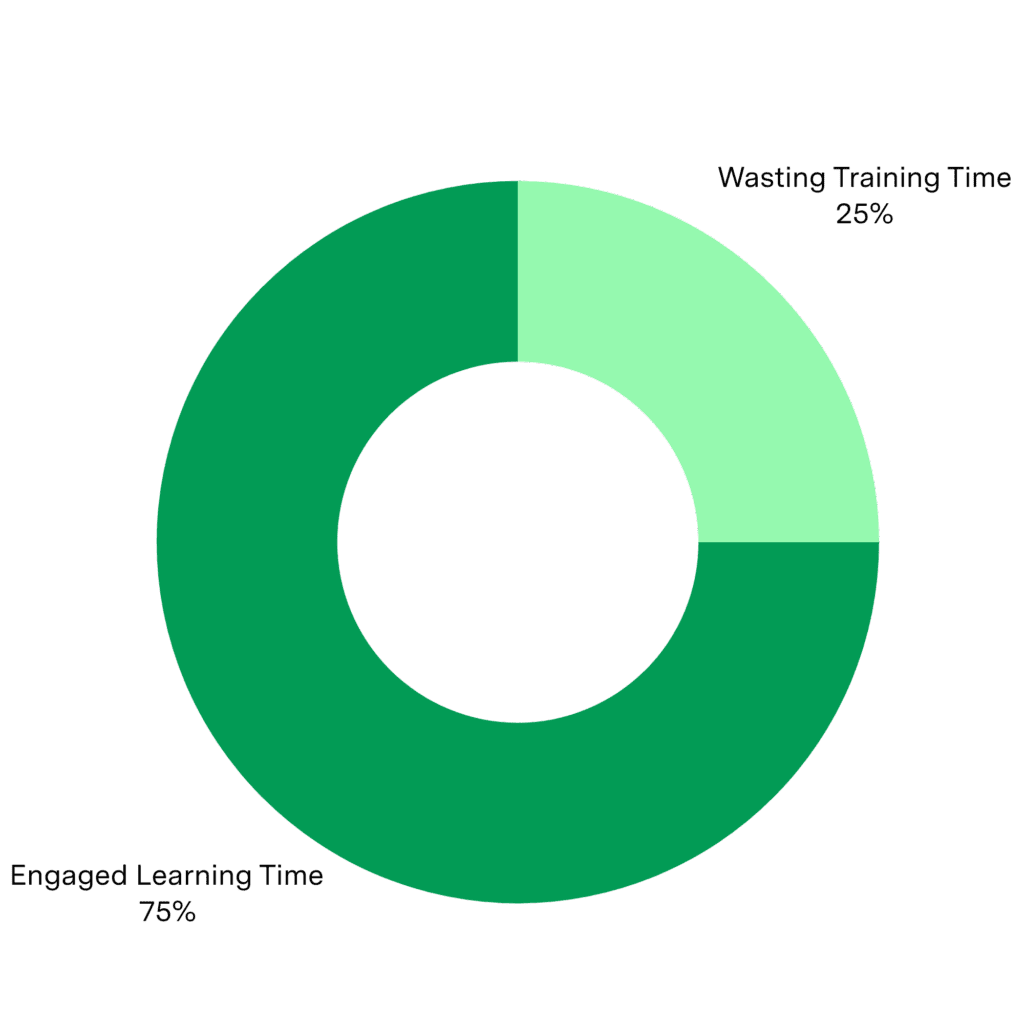
- Personalized learning paths: AI analyzes individual skill gaps, goals and preferences to create tailored content, boosting engagement and motivation for your frontline teams. This optimizes training time and targets skill development.
- Adaptive content: Learning platforms adjust material difficulty, format and pace in real-time based on performance, enhancing knowledge retention. This means better retention and more relevant learning.
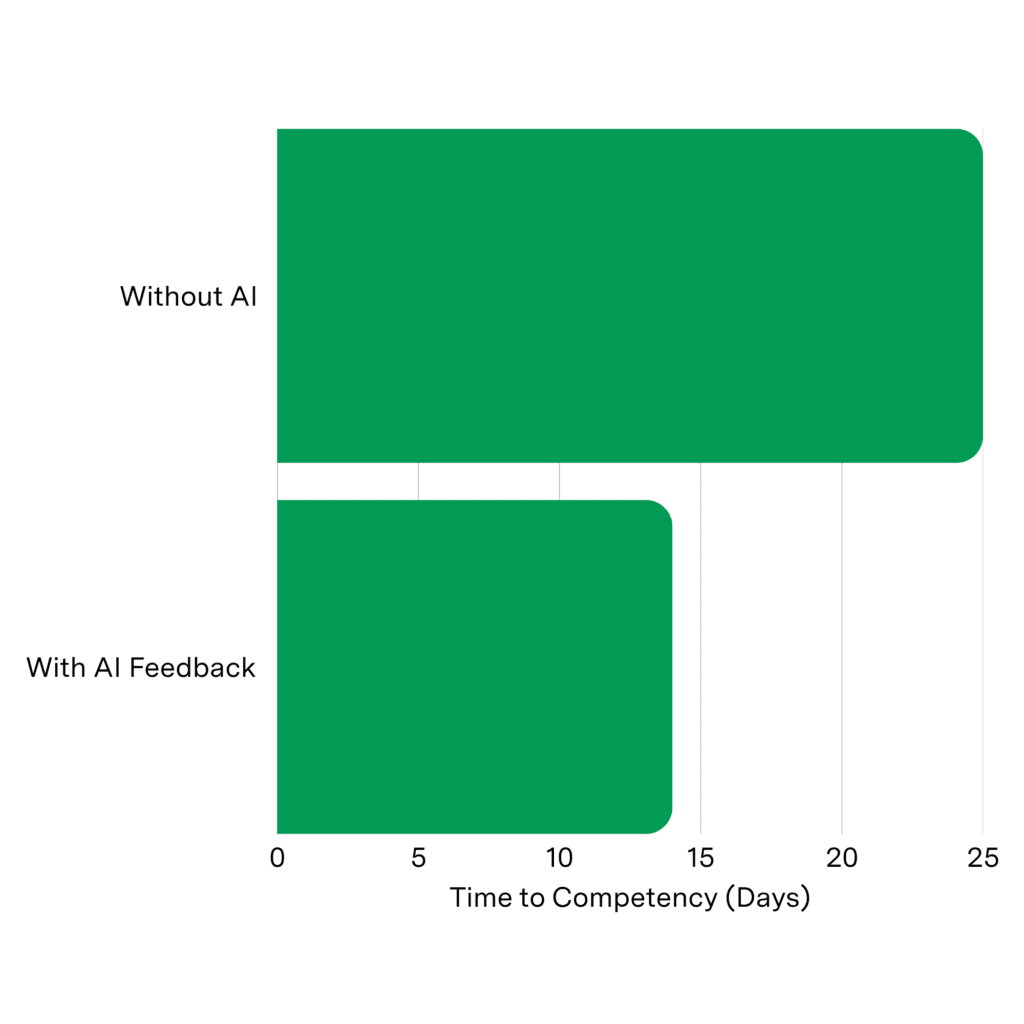
- Real-time feedback: AI systems provide immediate evaluations, enabling learners to quickly identify and correct strengths and weaknesses. This accelerates skill acquisition and reduces errors in crucial frontline tasks.
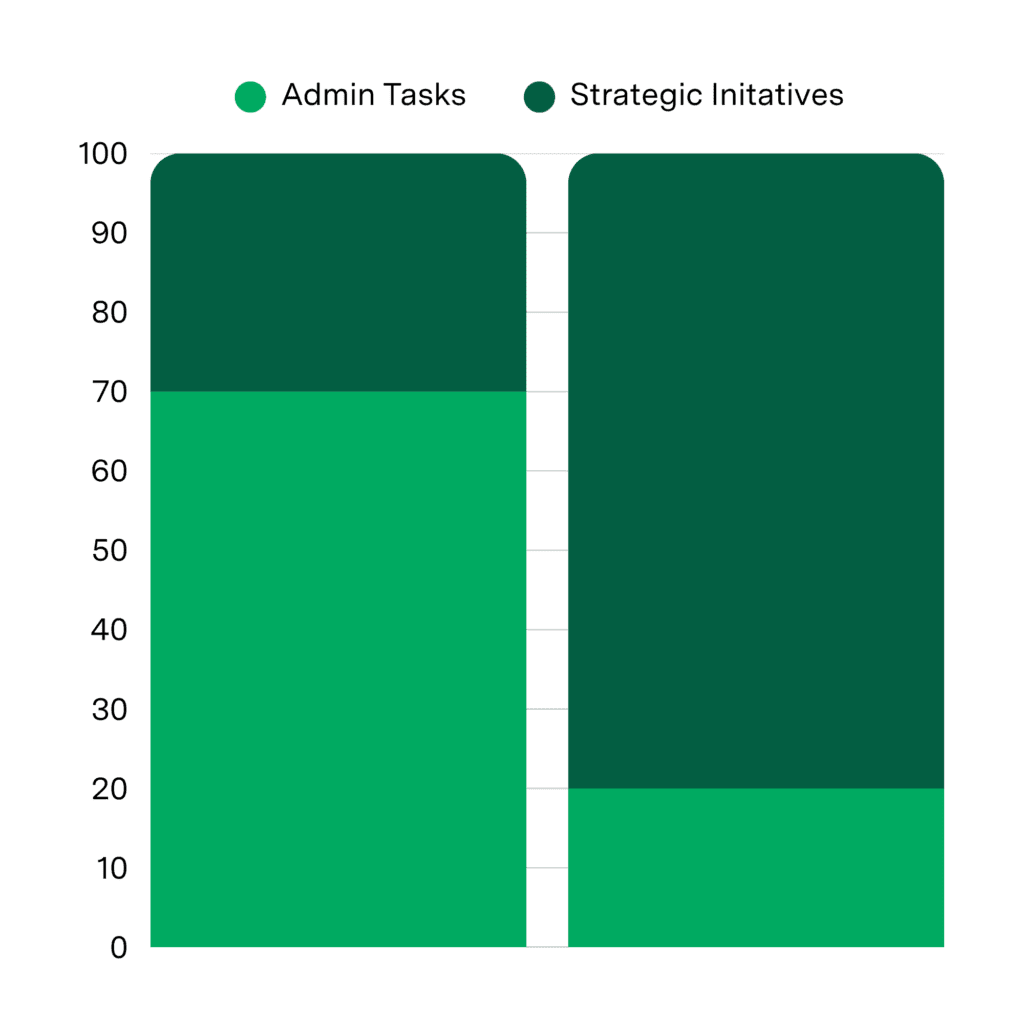
- Automation of administrative tasks: AI automates scheduling, grading and content creation, freeing your HR and operational support teams for strategic initiatives.
- Enhanced accessibility: AI supports mobile learning and offers real-time translation, making vital operational content accessible in various formats and languages for diverse frontline teams.
The future of AI in frontline work: Built to support, not replace
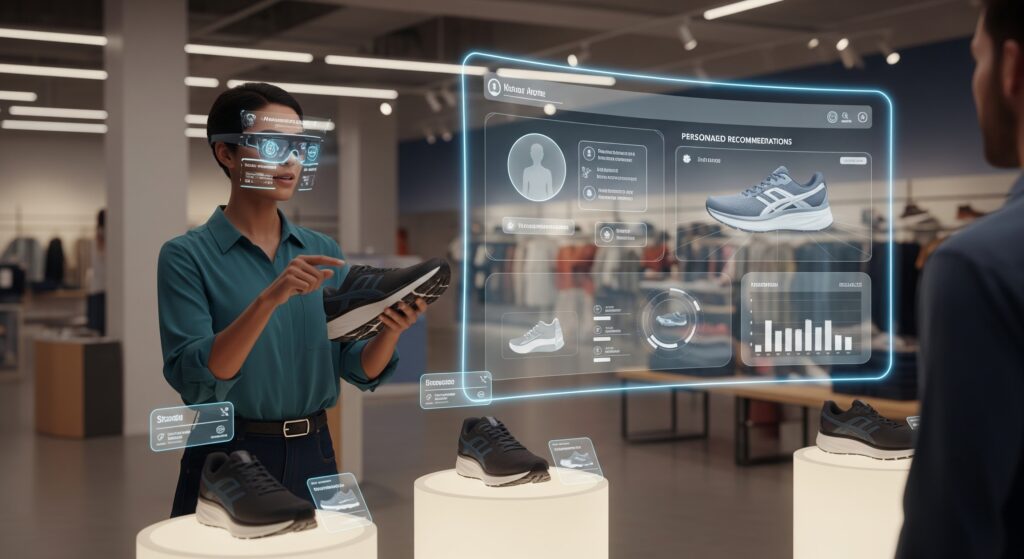
AI isn’t here to take over frontline jobs, it’s here to elevate them. In the future, AI will act like a co-pilot: handling repetitive tasks, offering real-time suggestions and empowering frontline workers to focus on what humans do best: problem-solving, critical thinking and empathy.
What’s next for frontline-focused AI:
- Hyper-personalization at scale: AI will adapt not just to learning needs, but also to context—delivering real-time support that fits the task, the moment and the individual.
- Sophisticated AI virtual coaches: These will offer more human-like interactions, nuanced guidance and deeper connections with learners, providing continuous, on-demand support for your employees.
- Learning embedded in the flow of work: AI will anticipate information needs and deliver just-in-time learning snippets, minimizing disruption to your operations.
- Generative AI for dynamic content creation: Rapidly generating interactive videos, simulations, quizzes and even entire courses will become standard, meaning faster development of relevant training materials.
- Advanced analytics and insights: This will provide deeper, predictive insights into learning effectiveness, forecasting skill gaps and identifying at-risk learners, enabling proactive talent management and operational adjustments.
And importantly, AI can help build a more inclusive workplace—breaking down language and learning barriers, adapting to diverse needs and creating more equitable development opportunities for every employee.
▶️ Also read: How to improve operational efficiency on the frontline
What Operations and HR leaders can do next
You play a critical role in shaping how AI enhances your workforce. That starts with understanding how frontline work is changing—and setting your people and systems up for success.
Here’s how to get started:
- Assess your AI readiness: Evaluate existing data infrastructure, current training programs and your teams’ AI literacy.
- Upskill teams in AI literacy: Invest in training for your HR, IT, and operational leadership on AI fundamentals and how AI fits into their workflows.
- Start small with pilot programs: Begin with small, focused pilots, such as automating onboarding or personalizing learning for a specific role, to test impact before scaling across your organization.
- Break silos with cross-functional collaboration: Bring together departments like HR, IT, and Operations on AI initiatives to ensure alignment and comprehensive implementation.
- Build a culture of continuous learning: Promote an environment that embraces AI as a tool for growth, encouraging exploration and experimentation among your frontline employees.
- Establish a human-first AI governance framework: Ensure AI implementation is ethical, transparent and fair, prioritizing data privacy and minimizing bias. This is critical for maintaining employee trust and compliance.
- Measure and iterate: Continuously track the impact of AI adoption on operational outcomes and employee performance to refine your strategies.
AI is already reshaping how frontline teams learn, work and grow. Put AI to work with intention, ethics and empathy in order to drive real operational outcomes and prepare your organization for what’s next.
Learn how you can put AI to work for your frontline in our free guide: A practical guide to optimizing frontline performance with AI.
Explore more in our AI blog series
Want to dive deeper into how AI is reshaping the frontline?
Check out the other posts in our AI series:
Part 1—From hype to frontline impact: Building trust through thoughtful AI
Part 2—How to accelerate onboarding with AI
➡️ Coming soon: Part 4 – Using AI to create unforgettable customer service.
We’ll explore how AI can empower your frontline to deliver faster, more personalized and truly standout customer experiences.