How AI merchandising is transforming retail operations
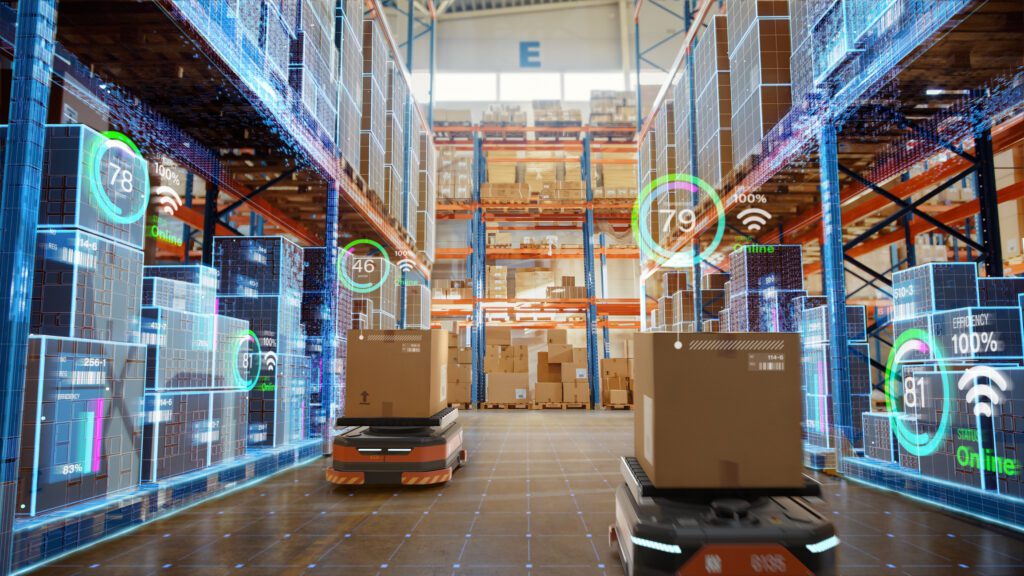
AI merchandising uses artificial intelligence to analyze retail data, predict consumer demand and automate decisions about product assortment, pricing and inventory. It transforms the way retailers plan what to stock, where to place it and how to price it, shifting from reactive, spreadsheet-driven processes to real-time, data-informed strategies.
Retailers using AI merchandising are seeing measurable results: stockouts reduced by up to 30%, faster inventory turnover and promotions that actually hit their targets. This guide covers how AI is reshaping merchandising operations, the key use cases driving ROI and what it takes to get frontline teams executing on AI-generated insights.
In this article
What is AI merchandising
AI merchandising refers to the use of artificial intelligence to analyze retail data, predict consumer trends and automate merchandising decisions. Instead of relying on spreadsheets and intuition, retailers can turn raw sales and inventory data into specific recommendations for product assortment, pricing and store layouts.
Four components make up most AI merchandising systems:
- Data analysis: AI processes large datasets—sales history, inventory levels, customer behavior—to spot patterns that would take humans weeks to identify manually.
- Predictive capabilities: The system forecasts future demand, flags emerging trends and estimates how price changes will affect sales volume.
- Automation: AI handles repetitive work like reordering stock, adjusting prices and generating store-specific planograms (visual diagrams showing where products go on shelves).
- Personalization: AI tailors product recommendations and promotions to specific customer groups based on purchase history and browsing behavior.
How AI is transforming retail merchandising
The shift from traditional to AI-powered merchandising changes how retail decisions get made. Rather than replacing human judgment, AI adds data-driven precision to the process.
From manual processes to intelligent automation
Traditional merchandising relies heavily on historical reports and experienced merchants’ gut feelings. While valuable, this approach tends to be slow and reactive. AI-enabled workflows process data in real time and deliver forward-looking recommendations, which frees merchandising teams to focus on strategy rather than data entry, a key driver of operational efficiency.
Real time data and predictive insights
Most traditional merchandising decisions are based on last month’s or last quarter’s numbers. AI retail merchandising, on the other hand, reacts to current market conditions. Predictive analytics, a method that uses current and historical data to forecast future events—allows retailers to adjust inventory, pricing and promotions before demand shifts rather than after.
The shift toward customer centric strategies
AI helps retailers move from asking “What can we sell?” to “What do our customers want to buy?” By analyzing shopper preferences and behaviors, AI driven digital merchandising insights help build product assortments that match what specific customer segments are actually looking for.
Key use cases of AI in retail merchandising
Retailers can apply AI across the full merchandising lifecycle, from planning and forecasting to pricing, placement and personalization.
Demand forecasting and inventory management
AI predicts what products will sell, when and in which locations with 20–50% fewer forecasting errors. This capability helps retailers keep the right amount of stock on hand—not so much that it sits unsold and not so little that shelves go empty. AI can also factor in seasonal patterns, local weather and community events when generating forecasts.
Assortment planning and optimization
Assortment planning is the process of deciding which products a store will carry. AI analyzes sales data, customer demographics and local trends to determine the best product mix for each store or region. A store in a college town might stock different items than one in a retirement community, even within the same retail chain.
Visual merchandising and store layout
AI powered merchandising uses data from in-store cameras and traffic pattern analysis to optimize product placement. Heat maps show where customers spend time and which areas they skip, helping retailers identify high-traffic zones and underperforming sections.
Pricing and promotion optimization
Dynamic pricing adjusts prices in real time based on demand, competition and inventory levels. AI can also identify the best timing, discount amount and target audience for promotions. Price elasticity—how much demand changes when price changes—plays a key role in these calculations.
Personalization and product recommendations
AI powers the “customers also bought” suggestions on e-commerce sites and in marketing emails. In physical stores, AI can help associates make tailored recommendations or deliver personalized offers at checkout.
How to implement AI retail merchandising
Successful AI merchandising requires more than new technology. It depends on clear goals, strong data foundations and thoughtful change management.
1. Assess your current merchandising capabilities
Before investing in new technology, take stock of existing processes, data sources and team skills. Where does your data live and is it accurate? Which merchandising tasks take the most time? What are the limitations of your current systems?
2. Define clear goals and success metrics
Start with specific, measurable outcomes. “Reduce stockouts by 15% in Q3” or “improve sell-through for winter apparel by 10%” are more useful targets than “use more AI.”
3. Select the right AI merchandising solution
When evaluating vendors, consider:
- Integration capabilities: Can the solution connect with your existing POS, ERP and inventory systems?
- Ease of use: Is the interface intuitive for merchandisers and store managers who aren’t data scientists?
- Scalability: Can the solution grow from a pilot program to enterprise-wide deployment?
4. Integrate AI with your existing tech stack
Connect new AI tools to core systems like Point of Sale (POS), inventory management and Enterprise Resource Planning (ERP). Data formatting inconsistencies and legacy system limitations are common hurdles during integration.
5. Train your team on AI powered tools
Technology adoption depends on people. Training works best when it’s ongoing, accessible and tailored to different roles, with measurable impact on performance. A single training session rarely creates lasting proficiency.
6. Launch a pilot program and iterate
Start small—one use case or one geographic region. Measure results against your predefined metrics, gather feedback and adjust before rolling out more broadly.
Training frontline teams to execute AI powered merchandising
AI-driven insights only create value when frontline teams act on them. The most sophisticated AI strategy falls flat if store associates don’t know what to do with the recommendations, yet 87% of retailers report revenue increases directly attributable to AI implementation.
Communicating AI driven insights to store associates
AI recommendations—a new planogram, a promotional display setup—require translation into clear, actionable guidance. Communication works best when it’s simple, visual and directly tied to daily tasks.
Building merchandising knowledge through microlearning
Short, focused training modules delivered on mobile devices help associates understand core merchandising principles and the reasoning behind AI-generated directives. A mobile-first approach makes learning accessible during the workday rather than requiring time away from the floor.
Using task management to drive compliance
Digital task management tools deliver merchandising directives to the right people at the right time. Clear instructions, deadlines and completion tracking give managers visibility into whether tasks are getting done correctly.
Best practices for AI merchandising success
Retailers that achieve sustained ROI from AI merchandising tend to follow a consistent set of principles focused on focus, alignment and continuous optimization.
1. Start with a focused use case
Trying to transform everything at once rarely works. Begin with a single, high-impact area—demand forecasting or inventory management often offer clear, measurable returns.
2. Ensure data quality and accessibility
AI is only as good as the data it analyzes. Regular data hygiene checks remove duplicates and correct errors. Breaking down data silos creates a single source of truth for the AI to work with.
3. Involve stakeholders across departments
Successful AI implementation requires buy-in from merchandising (to validate insights), operations (to confirm execution is feasible), IT (to manage integration) and store leadership (to champion changes with frontline teams).
4. Maintain human oversight and judgment
AI augments human expertise rather than replacing it. Merchandisers remain essential for validating recommendations, applying brand context and overriding suggestions when circumstances warrant.
5. Measure results and optimize continuously
Track metrics like inventory turnover, sell-through rate, gross margin and stockout frequency. Use results to fine-tune AI models over time.
AI merchandising challenges and solutions
While AI delivers significant value, retailers must plan for common challenges related to data quality, adoption and execution at scale.
| Challenge | Solution |
|---|---|
| Data silos and integration complexity | Prioritize AI platforms with robust integration capabilities or invest in a central data warehouse |
| Resistance to change among teams | Communicate how AI augments roles rather than replacing them; provide hands-on training |
| Unrealistic expectations | Set incremental goals and start with pilot programs to demonstrate value |
| Gaps between AI insights and frontline execution | Implement integrated communication and task management tools |
| Measuring true ROI | Establish baseline metrics before implementation; compare pilot groups to control groups |
How AI in merchandising is changing roles and responsibilities
A common question: will AI replace human merchandisers? The short answer is no. Merchandising AI automates tedious tasks while enabling greater focus on strategy and creativity.
Skills merchandisers need in an AI driven environment
Merchandisers working with AI benefit from:
Data interpretation: Understanding and adding context to AI-generated recommendations
Strategic thinking: Focusing on long-term brand positioning and customer experience
Technology fluency: Comfort with AI-powered tools and platforms
Moving from tactical tasks to strategic decision making
AI handles routine, data-heavy analysis that once consumed much of a merchandiser’s time. This shift frees merchandisers to focus on discovering market trends, building vendor relationships and developing innovative merchandising approaches.
Future trends in AI driven digital merchandising insights
Advances in AI continue to expand what’s possible in merchandising, pushing retailers toward more autonomous, real-time and personalized experiences.
Agentic AI and autonomous decision making
Emerging “agentic AI” systems move beyond recommendations to taking action within predefined parameters. An AI agent might automatically execute a price change or place a purchase order when certain conditions are met, with human oversight built in.
Computer vision for shelf monitoring
Retailers are increasingly using cameras and image recognition to monitor shelf conditions in real time. Computer vision can detect out-of-stock products, check planogram compliance and verify pricing signage, then alert store teams to fix issues immediately.
Hyper personalization across channels
The line between in-store and digital merchandising continues to blur. AI will power unified customer profiles that enable personalization across all channels—a customer’s online browsing history could influence the promotions they see on in-store digital screens.
How frontline execution drives AI merchandising ROI
AI merchandising success depends on three factors: smart technology, quality data and empowered frontline teams. Many retailers focus on the first two while overlooking the third.
An AI strategy is only as good as its execution on the store floor. When frontline teams have the right information, skills and tools, they turn AI-driven insights into consistent, high-quality customer experiences. Platforms that integrate training, communication and task management help bridge the gap between corporate strategy and frontline action.
Take a product tour to see how Axonify helps
retailers turn merchandising strategy into frontline action.
Frequently asked questions about AI merchandising
These common questions address how retailers are using AI today and what to expect when adopting AI merchandising solutions.
How is Walmart using AI for merchandising?
Walmart uses AI across its operation, including inventory management, demand forecasting and in-store robotics. The retailer has invested in computer vision to monitor shelf availability and predictive analytics to optimize its supply chain and reduce food waste.
Will AI completely replace human merchandisers?
No. AI changes the merchandiser’s role by automating tactical tasks, which frees merchandisers to focus on strategic oversight, creative problem-solving and vendor relationships. Merchandisers who learn to work with AI tools become more valuable, not less.
What is the typical ROI timeline for AI merchandising investments?
Timelines vary based on complexity and organizational readiness. Most retailers begin seeing measurable improvements in metrics like inventory turnover and stockout rates within six to twelve months of successful implementation.
What data does a retailer need to get started with AI merchandising?
At minimum, retailers benefit from clean, accessible point-of-sale (POS) data, inventory records and basic product information. More advanced use cases deliver better results with additional data like customer loyalty information, store traffic patterns and external factors like weather forecasts.