Retail operations: How to optimize store functions and performance
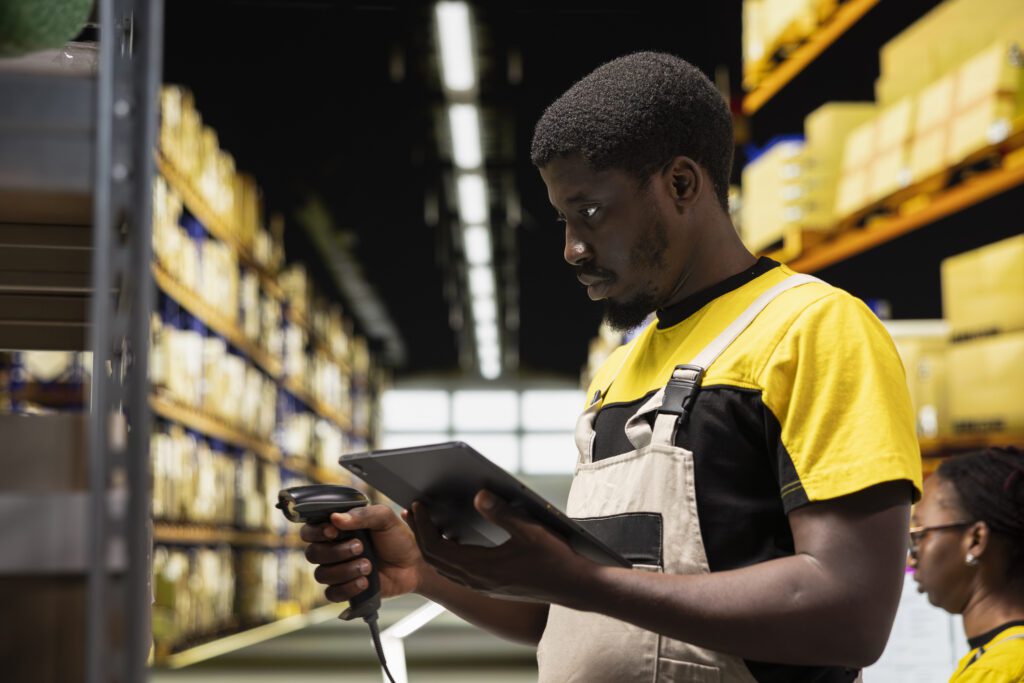
Retail operations are the daily activities, systems and processes that keep a retail business running, from managing inventory and staff to ensuring customers have a consistent experience whether they’re shopping in-store or online. When these functions work together, they drive efficiency, protect margins and build the kind of loyalty that keeps people coming back.
The challenge for multi-location retailers is making sure every store executes at the same level, every shift. This guide covers the core functions of retail store operations, common challenges that undermine consistency and practical approaches to automation, measurement and platform selection.
In this article
What are retail operations
Retail operations are the daily activities, systems and processes that keep a retail business running, from managing inventory and staff to ensuring positive customer experiences in physical stores or online. When all of these functions work together, they boost efficiency, profitability and customer loyalty across every location.
You can think of retail operations as everything happening behind the scenes and on the floor to turn strategy into reality. Storefront operations cover physical layout and merchandising. In-store operations include daily tasks like opening procedures and customer service. And retail operations logistics moves products from warehouse to shelf.
For multi-location retailers, the challenge gets bigger. Each store interprets tasks differently, communication gets lost between headquarters and the floor and maintaining consistent brand standards becomes harder with every new location. That’s why so much of retail operations work focuses on helping frontline teams deliver the same customer experience, whether someone walks into a store in Boston or Phoenix.
One quick distinction worth noting: store operations refers specifically to what happens within individual locations, while retail operations is the broader category that includes supply chain, corporate functions and cross-location coordination.
Core functions of retail store operations
Every retail store, regardless of size or industry, relies on a set of interconnected functions to operate effectively. Understanding where breakdowns occur helps identify where improvements can drive the biggest impact.
Employee management and training
Your frontline workers are the face of your brand. Effective employee management covers scheduling, onboarding and ongoing skill development.
When training is delivered in short bursts that fit into the flow of work—rather than pulling employees off the floor for hours—ramp time decreases and execution consistency improves. The goal is confident employees who know exactly what to do in any situation.
Customer service
Customer service encompasses every interaction between frontline employees and shoppers: greeting customers, answering questions, resolving complaints and creating positive experiences. These moments define whether someone becomes a loyal customer or walks out frustrated.
Strong customer service depends on employees understanding brand standards and having the knowledge to handle common scenarios. When frontline workers feel prepared, customer satisfaction scores tend to rise.
Inventory management
Inventory management involves tracking stock levels, replenishing shelves and maintaining accuracy between what your system says you have and what’s actually available. Poor inventory management leads to out-of-stocks (lost sales) or overstock situations (tied-up capital).
Real-time visibility into inventory across locations has become essential, especially as customers expect to check availability online before visiting a store.
Store safety and loss prevention
Shrink—the loss of inventory due to theft, damage or administrative errors—costs U.S. retailers over $100 billion annually. Loss prevention includes security protocols, employee training on theft awareness and safety procedures that protect both workers and customers.
Effective loss prevention goes beyond surveillance cameras. Building awareness into daily routines helps employees recognize and respond to risks before they become costly problems.
Task and workflow management
Daily checklists, planograms, promotional setups and operational procedures keep stores running consistently. Task management ensures that every location completes the same activities to the same standard, whether it’s a morning opening checklist or a seasonal display change.
Without standardized retail store processes, execution varies wildly from store to store, and customers notice the difference.
Order fulfillment and logistics
The rise of buy online, pick up in store (BOPIS) and curbside pickup has transformed retail operations logistics. Stores now function as mini-fulfillment centers, requiring employees to pick, pack and prepare orders alongside their traditional responsibilities.
Clear processes and real-time communication help frontline workers balance in-store customers with online order fulfillment.
Communication across locations
Headquarters constantly sends updates—new promotions, policy changes, compliance requirements, product recalls. The challenge is reaching deskless workers who don’t sit at computers or check email regularly.
When communication breaks down, stores miss critical information, execute promotions incorrectly or remain unaware of safety issues. Centralized, mobile-first communication channels help ensure every employee sees what they need to see.
| Function | What it covers | Why it matters |
|---|---|---|
| Employee management | Scheduling, training, onboarding | Prepared, confident staff |
| Customer service | Greeting, assistance, issue resolution | Customer satisfaction and loyalty |
| Inventory management | Stock tracking, replenishment | Product availability |
| Loss prevention | Theft prevention, safety protocols | Margin protection |
| Task management | Checklists, planograms, daily procedures | Consistent execution |
| Order fulfillment | BOPIS, curbside, ship-from-store | Omnichannel experience |
| Communication | HQ-to-store updates, policy changes | Aligned frontline teams |
Common challenges in retail operations management
Even well-established retailers struggle with operational challenges that undermine consistency and profitability. Recognizing pain points is the first step toward solving them.
Inconsistent execution across stores
When 50 stores interpret the same directive 50 different ways, customers receive wildly different experiences depending on which location they visit. This inconsistency erodes brand trust and makes it nearly impossible to measure what’s actually working.
The root cause is often unclear communication, inadequate training or lack of accountability tools. Without visibility into how each store executes, headquarters operates blind.
High frontline employee turnover
Retail turnover rates hover around 60% annually, meaning many stores essentially rebuild their workforce every year. Each departure takes institutional knowledge with it and creates constant retraining demands.
High turnover also strains remaining employees, who pick up extra shifts while new hires get up to speed. The cycle becomes self-reinforcing.
Communication gaps between headquarters and stores
Messages sent from corporate don’t always reach the people who need them. Frontline workers miss emails, skip lengthy documents and sometimes never see critical updates at all.
Only 39% of frontline employees find communication in their organizations “very helpful.” When communication fails, execution suffers.
Inventory shrink and theft
Shrink continues to rise despite increased security investments. Traditional approaches—cameras, security tags, loss prevention officers—address symptoms rather than root causes.
Employee awareness and proper procedures often prevent more loss than surveillance alone, yet many retailers underinvest in training frontline workers to recognize and respond to theft.
Slow onboarding and ineffective training
New hires often spend days or weeks in training before they’re productive on the floor. Meanwhile, traditional training methods—lengthy videos, thick binders, classroom sessions—don’t translate into retained knowledge or changed behavior.
People forget up to 90% of training content within a week if it’s not reinforced. That’s a significant investment with minimal return.
Best practices for in-store operations
Improving retail operations doesn’t require a complete overhaul. A few focused practices can drive consistency and performance across locations.
1. Standardize daily procedures across all locations
Documented standard operating procedures (SOPs) and digital checklists ensure every store follows the same playbook. When expectations are clear and trackable, execution becomes consistent.
Digital task management tools allow headquarters to push specific tasks to specific stores, verify completion and identify locations that need additional support.
2. Integrate training into the flow of work
Rather than pulling employees off the floor for hours of training, delivering knowledge in short bursts—3 to 5 minutes—fits between customer interactions. This microlearning approach improves retention while minimizing disruption, with 58% of employees preferring microlearning due to its brevity and relevance.
Platforms like Axonify deliver personalized training based on each employee’s knowledge gaps, ensuring workers get exactly what they need without wasting time on content they’ve already mastered.
3. Centralize communication to reach every frontline worker
A single communication channel accessible on mobile devices ensures messages reach deskless employees regardless of their shift or location. Push notifications, read receipts and targeting by role help confirm that critical information gets through.
When communication is centralized, employees know exactly where to look for updates instead of hunting through multiple systems.
4. Use real-time reporting for faster decisions
Visibility into store-level performance helps managers identify issues before they become crises. Real-time dashboards showing task completion, training progress and key metrics enable faster intervention.
Without this visibility, problems often go unnoticed until they show up in quarterly results—too late to course-correct.
5. Build loss prevention into daily routines
Security awareness training embedded into regular learning reinforces vigilance without requiring separate loss prevention sessions. When employees understand how shrink happens and what to watch for, they become an active part of the solution.
Short, scenario-based training on theft recognition and proper procedures often delivers better results than additional surveillance technology.
6. Plan for omnichannel and multi-store operations
Modern retail operations strategy accounts for BOPIS, curbside pickup, ship-from-store and cross-location inventory visibility, with BOPIS sales reaching $154.3 billion in 2025. Employees benefit from clear processes for handling online orders alongside in-store customers.
Training and communication systems that support omnichannel execution help frontline workers manage competing priorities without sacrificing service quality.
How to automate retail store operations
Automation frees frontline workers to focus on customer-facing tasks while ensuring routine processes happen consistently.
Inventory tracking and replenishment
Automated reorder points trigger restocking before shelves go empty. Real-time inventory visibility across locations helps balance stock and reduce both out-of-stocks and overstock situations.
Integration with POS systems ensures sales data flows directly into inventory management, eliminating manual counts and reducing errors.
Digital task management and checklists
Digital task lists replace paper checklists, providing accountability and visibility. Headquarters can push tasks to specific stores, track completion in real time and identify patterns across locations.
Automated task assignment based on role, shift or location ensures the right people receive the right responsibilities.
Employee onboarding and microlearning
Automated training delivery personalizes content to each employee’s knowledge gaps, reducing time spent on training while improving retention. New hires receive exactly what they need to get productive quickly.
Axonify’s frontline operations platform uses AI to adapt training based on individual performance, ensuring employees build knowledge over time rather than forgetting it within days.
Centralized frontline communication
Automated message delivery ensures every employee sees critical updates, with read receipts confirming who has and hasn’t viewed important information. Targeting by role or location prevents information overload.
Scheduled communications can align with shift changes, ensuring workers receive updates when they’re most likely to act on them.
Essential tools for store operations management
The right technology stack supports consistent execution across locations.
Frontline operations platforms
Frontline operations platforms integrate training, communication and task management into a single experience designed specifically for deskless workers. Rather than juggling multiple systems, employees access everything they need in one place.
Axonify is an example of this category, combining training, push communication and digital task management to help frontline teams execute consistently every shift.
Inventory management systems
Inventory management systems (IMS) handle stock tracking, automated reordering and warehouse integration. IMS platforms provide visibility into what’s available across locations and help prevent stockouts.
Point of sale systems
POS systems process transactions, collect sales data and often integrate with inventory and workforce management tools. Modern POS systems provide real-time sales visibility that informs operational decisions.
Workforce management software
Workforce management tools handle scheduling, time tracking and labor forecasting. WFM systems help optimize staffing levels based on expected traffic and sales patterns.
| Tool type | Primary function | Best for |
|---|---|---|
| Frontline operations platform | Training, communication, task management | Consistent execution across locations |
| Inventory management system | Stock tracking and replenishment | Product availability |
| Point of sale system | Transaction processing | Sales data and checkout |
| Workforce management | Scheduling and labor tracking | Staffing optimization |
How to measure retail operations performance
Tracking the right metrics helps identify what’s working and where intervention is needed.
Sales and productivity metrics
- Sales per labor hour: Revenue generated relative to labor investment
- Units per transaction: Average items sold per customer
- Conversion rate: Percentage of store visitors who make a purchase
Shrink and loss prevention rates
Inventory loss as a percentage of sales indicates how effectively loss prevention efforts are working. Benchmarking against industry standards helps contextualize performance.
Customer satisfaction scores
Net Promoter Score (NPS), customer satisfaction surveys and mystery shopper results measure how well frontline execution translates into customer experience. Customer satisfaction metrics often correlate directly with sales performance.
Employee retention and engagement
Turnover rate and engagement scores indicate operational stability. High turnover signals problems that affect both costs and customer experience.
Training completion and knowledge retention
Completion rates show whether employees are engaging with training, but knowledge retention metrics reveal whether that training actually sticks. Platforms with built-in assessments can track both, showing the connection between learning and on-the-job performance.
Ready to see how frontline operations platforms drive measurable results?
See how Axonify helps retailers improve execution across every location.
How to choose a retail operations platform
Selecting the right platform can significantly impact operational consistency and frontline performance.
1. Assess your current operational gaps
Start by identifying where inconsistency, communication breakdowns or training failures occur. Are stores executing promotions differently? Are new hires taking too long to become productive? Understanding specific challenges helps prioritize features.
2. Prioritize integration and ease of use
A unified platform that combines training, communication and task management eliminates the friction of switching between systems. Mobile-first design matters for frontline workers who don’t sit at desks.
- Single sign-on (SSO) for seamless access
- Integration with existing HR and workforce systems
- Intuitive interface that requires minimal training to use
3. Evaluate frontline-specific features
Generic enterprise software often fails frontline workers. Look for platforms purpose-built for deskless employees:
- Microlearning that fits into 3–5 minute windows
- Push communication that reaches workers on mobile devices
- Digital task management with accountability and visibility
4. Look for measurable outcomes and proven ROI
The best platforms demonstrate business impact, not just engagement metrics. Ask vendors for case studies showing improvements in sales, shrink reduction, productivity or turnover.
Turn strategy into frontline execution every shift
Retail operations success ultimately comes down to one thing: enabling frontline workers to deliver on brand standards consistently, every day, across every location. The systems, processes and tools you put in place either support that goal or create friction that undermines it.
When communication, training and task management work together seamlessly, frontline teams know exactly what to do and have the confidence to do it well. That consistency drives the outcomes that matter—increased sales, reduced shrink, improved customer satisfaction and lower turnover.
Axonify integrates communication, training and task management into a single frontline operations platform, helping retailers turn company strategy into everyday actions.
Frequently asked questions about retail operations
What does a retail operations manager do?
A retail operations manager oversees daily store functions, ensures consistent execution of company standards, manages staff performance and coordinates between headquarters and individual locations. Retail operations managers are responsible for translating corporate strategy into on-the-ground action across multiple stores.
What are the 5 S’s of retail operations?
The 5 S’s—Sort, Set in order, Shine, Standardize and Sustain—are workplace organization principles borrowed from lean manufacturing. Retailers use the 5 S framework to maintain clean, efficient and consistent store environments that support both employee productivity and customer experience.
What is the difference between retail operations and store operations?
Retail operations encompasses all activities across a retail business, including supply chain, corporate functions and multi-location coordination. Store operations specifically refers to the daily tasks and processes within individual store locations—it’s a subset of the broader retail operations category.
How can retailers improve operations without increasing headcount?
Retailers can improve operations by automating routine tasks, streamlining training delivery through microlearning and using integrated platforms that help existing employees work more efficiently. Technology that reduces time spent on administrative tasks frees workers to focus on customers.
What is a retail operations strategy?
A retail operations strategy is a plan for how a retailer will manage daily store functions, allocate resources and enable frontline teams to deliver consistent customer experiences across all locations. A retail operations strategy typically addresses staffing, training, communication, technology and performance measurement.