Holiday hiring & onboarding: How to get seasonal staff productive, fast

Seasonal hiring brings intense pressure: high volumes, tight timelines and the challenge of retaining staff long enough to make a real impact. When the onboarding process falls short, the consequences are costly, leading to poor customer experiences, higher turnover and compliance risks.
The solution is to rethink onboarding as a frontline performance strategy. With Axonify, seasonal staff ramp up faster, perform more consistently and stay engaged throughout the busy season.
In this article, you’ll learn what traditional employee onboarding often misses, how to plan for seasonal hiring success, best practices that deliver lasting impact and how leading retailers are already turning onboarding into a competitive advantage.
The unique challenges of holiday hiring
Seasonal hiring looks very different from the regular hiring process. The timelines are shorter, the stakes are higher and the risks can add up quickly if HR teams are not prepared.
The holiday rush leaves little room for error, which is why the challenges below need extra attention.
Time-to-proficiency over time-to-hire
Seasonal team members are expected to get up to speed almost immediately. A worker who cannot handle tasks within days, not weeks, creates delays that ripple through the operation.
High-volume onboarding risks
Many retailers and distribution centers hire hundreds or even thousands of temporary employees in a short window. At that scale, training can quickly become inconsistent. One group might hear different instructions from another, while some workers may miss key details altogether. The result is confusion on the floor and uneven performance across the seasonal workforce.
Seasonal staff expectations
Seasonal job seekers also bring their own expectations. They want onboarding that is quick, simple and mobile-friendly. Most do not expect a full classroom experience. They want tools that help them learn on the go so they can get started with confidence.
The cost of poor onboarding
When effective onboarding doesn’t happen, the effects show up fast. Seasonal staff may lose interest or quit after only a few shifts. Rushed training puts safety at risk and leaves workers unprepared for key tasks. Mistakes follow—orders get delayed, customers leave frustrated and revenue takes a hit.
▶️ Also read: Employee onboarding best practices for the frontline + Free checklist
What traditional seasonal onboarding misses
Seasonal onboarding often starts with the right intentions but it tends to miss what matters most: getting people ready to perform. The focus leans toward process instead of preparing people to do the job well. That gap shows up quickly when the holiday rush begins.
Here’s where traditional onboarding tends to fall short:
- Paperwork takes priority. New hires spend a lot of time filling out forms and reviewing policies. These steps are necessary, but they don’t build confidence or connect people to company culture.
- Training is one-and-done. Seasonal workers may watch a video or sit through a single session, then head straight to the floor. Without practice or reinforcement, most of that knowledge is forgotten in just a few days.
- Managers get stretched too thin. Leaders are asked to coach large groups of part-time and short-term staff while also keeping the operation running. Some workers get guidance, others don’t, and performance suffers.
The result? A weak onboarding experience that impacts employee satisfaction, slows ramp-up, and drags down operational efficiency.
A new approach: Onboarding for frontline productivity & proficiency
Seasonal hires don’t just need to start. They need to start strong. This requires a modern approach that shifts the focus to helping people do their jobs well from the very first shift.
When onboarding is built for productivity and proficiency, seasonal staff become confident faster, managers spend less time chasing mistakes and customers notice smoother service. Axonify takes this performance-first approach and streamlines it for frontline teams at scale.
Here’s how:
- Personalized learning from day one
Axonify gives new employees customized learning paths. These are tailored by role, previous experience and what they already know. Staff get practical training—not generic modules. Microlearning bursts every shift reinforce what matters most. - Fast-track the redundant stuff
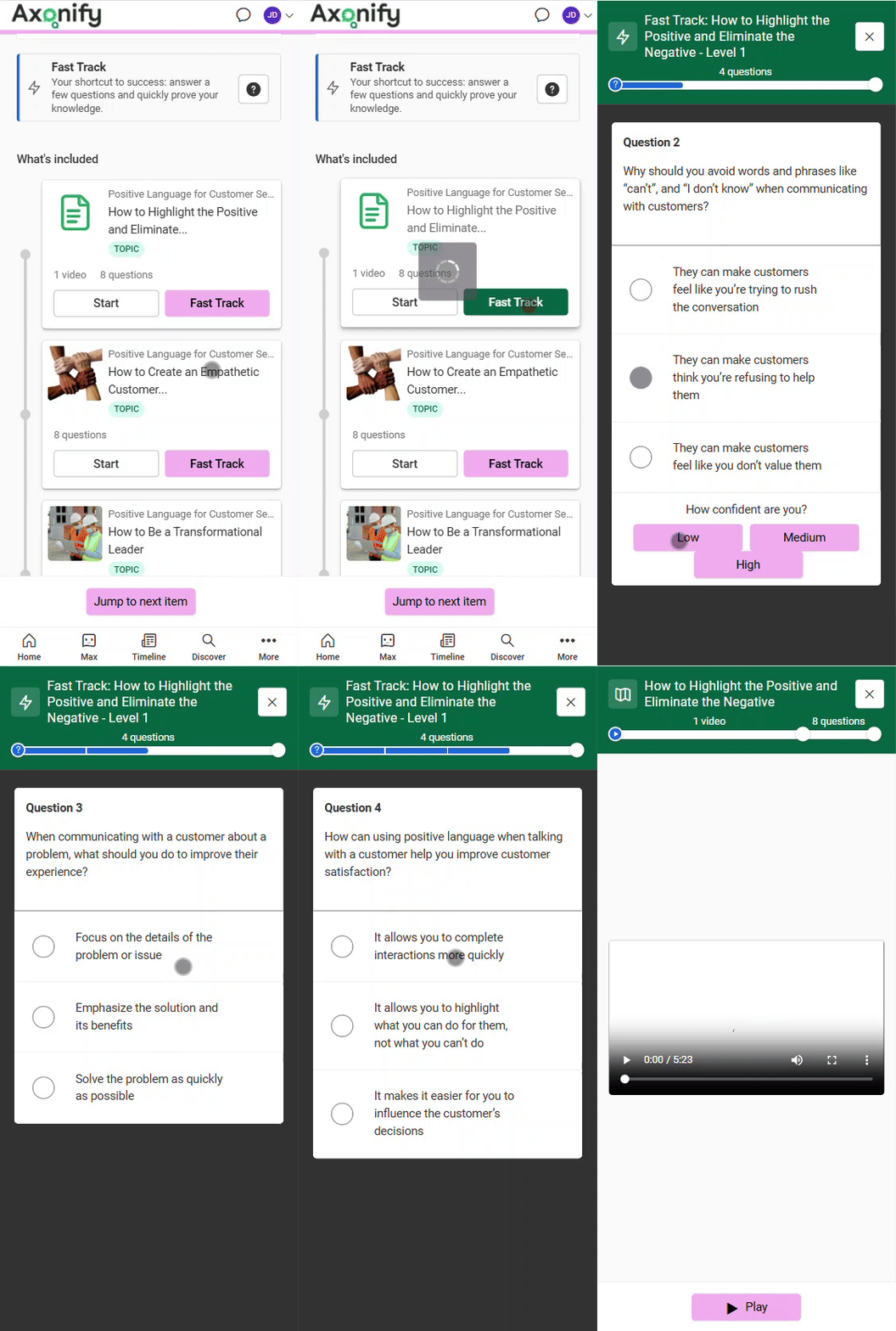
With the Fast Track feature, Axonify lets seasonal hires skip over content they already know. A quick assessment shows where they meet standards, then training adapts so they only spend time on gaps. That saves time and prevents frustration. - Instant help with Max AI assistant
When questions come up during a shift, Max jumps in. It’s built into the same app, so workers don’t switch tools. Max draws from the company’s knowledge base and gives answers fast. It supports 60+ languages. Accuracy is strong. Managers and mentors get fewer repeat questions, and staff work with confidence. - Keep knowledge fresh with reinforcement
It’s not enough to train once. Axonify uses reinforcement—short updates, quizzes, reminders—to make sure learning sticks. Staff revisit topics with regular check-ins. Over time, core skills become habits. - Resources at your fingertips
On the floor, new hires often need immediate answers—how to do a task, safety rules, product details. Axonify keeps job aids, FAQs and helpful content easily searchable and mobile-friendly. That means fewer guesses, fewer errors.
Together, these tools turn onboarding into a streamlined recruiting process that boosts employee engagement, builds confidence and improves retention rates.
How to plan for seasonal hiring success
Holiday hiring feels chaotic when everything happens at once. The best way to avoid that crunch is to prepare before the season starts. Here’s how:
- Pre-season readiness: Don’t wait until day one to get training ready. Upload seasonal learning paths, job aids, and communication campaigns in advance. That way, everything is ready to launch the moment new hires walk in.
- Consistent experience at scale: Standardize core onboarding across the organization to make sure every seasonal employee gets the same foundation. At the same time, tailor content by role (full-time vs. seasonal job) so a retail associate isn’t learning the same material as a warehouse picker.
- Manager enablement: Seasonal onboarding often falls on managers, who are already stretched thin. Set them up with tools that automate training and reduce repetitive questions. This frees managers to spend more time coaching and leading on the floor.
- Communication strategies: Seasonal staff often don’t have a company email, which makes communication tough. Use mobile-first tools to share updates, policy changes, and even culture messages. This keeps your seasonal workforce connected and aligned without relying on inboxes.
Planning ahead saves time and helps seasonal staff hit the ground running. And once they’re in a role, the focus shifts to keeping them engaged and productive.
Best practices for holiday onboarding that last beyond the season
Done well, seasonal onboarding can create lasting value for both the business and the people you bring on. Here are a few ways to make holiday onboarding work harder.
Welcome with purpose
First impressions matter. Use the first day to connect seasonal staff to your brand mission and frontline culture. Even if they’re only with you for a few months, showing how their role contributes to the bigger picture makes them feel part of the team.
Balance speed with retention
Quick ramp-up is critical, but speed alone won’t cut it. Reinforce training through microlearning and job aids so knowledge sticks. That way, seasonal workers can deliver consistent performance throughout their time with you, not just in the first week.
Listen through feedback loops
Seasonal staff often see things that permanent employees overlook. Use surveys, quick check-ins and digital feedback tools to gather their input. It helps spot training gaps early and improves the experience for future hires.
Think beyond the season
Many people hired in seasonal roles are open to coming back. Make reboarding easy by keeping their profiles and progress in your learning system. Next year, they’ll spend less time in training and more time being productive.
Holiday onboarding doesn’t have to end when the season does. With the right practices, it can strengthen culture and build a reliable talent pool for the future. The next step is knowing whether your approach is really working, which means measuring the right outcomes.
🎥 Discover how Lowe’s is using AI and technology to deliver personalized learning, instant support, and “everboarding”, helping seasonal staff stay sharp all season long.

Measuring the impact of seasonal onboarding
Good onboarding isn’t just about checking boxes. It’s about giving seasonal staff the tools and confidence to perform.
To know if your approach is working, you need to measure more than completion rates. The right metrics show how quickly and effectively new hires are contributing.
Time to proficiency
Track how long it takes seasonal employees to perform their core tasks without extra help. The faster they get there, the more value they deliver during the short holiday window.
Frontline productivity
Look at outputs that tie directly to business goals. In retail, this could be sales per labor hour. In distribution, it might be picking accuracy or order turnaround time. These numbers show how onboarding translates to real performance.
Compliance and safety outcomes
Seasonal staff often work in high-pressure environments. Measuring incidents, errors and compliance checks helps ensure training is sticking where it matters most.
Retention and rehire rates
High turnover during peak season can disrupt operations. Track how many seasonal hires stay through the season and how many return the following year. Strong onboarding improves both.
Measuring impact keeps you from guessing. It also helps make the case for continued investment in frontline learning. Once you can show the connection between onboarding and results, the value becomes clear.
Real-world proof from successful organizations
Metrics are important, but the best way to understand the impact of smarter onboarding is to see it in action. Several leading retailers and grocers have transformed their seasonal hiring results with Axonify.
Northgate González Market
Cut onboarding time from 3–4 weeks to less than a week while reducing safety incidents by 68%. Faster readiness meant associates could contribute almost immediately, without putting themselves or customers at risk.
Wakefern Food Corp
Reduced new-hire seat time by 50%. By making training shorter and more relevant, they boosted knowledge retention and frontline engagement—key during the busiest times of the year.
goeasy
Saw an 82% reduction in onboarding time and saved $1.2M in training costs. Their approach shows how efficient, digital-first onboarding can drive both performance and bottom-line results.
Floor & Decor
Achieved $7.5M in onboarding cost savings while increasing yearly sales by $40M. By focusing on frontline productivity from day one, they proved onboarding isn’t just an HR function—it’s a growth driver.
These examples show that when onboarding is built for the frontline, it pays off. Faster time to proficiency, stronger compliance, higher retention and measurable business outcomes are all within reach.
Looking ahead: Future-proofing seasonal onboarding
Seasonal onboarding is already shifting. To keep pace during peak seasons and beyond, operations leaders rely more on tools and strategies that improve agility, predictability and long-term performance.
AI-enabled assistants are the norm
AI Assistants like Max are becoming foundational. They provide immediate help during shifts, auto-answer FAQs and give feedback in the moment. This cuts ramp-up time and reduces mistakes.
As AI agents evolve, they personalize instruction, identify weak spots on the fly and adapt training content. Many organizations have already moved toward continuous AI-driven feedback loops to keep up with changing demands.
Predictive analytics sharpen workforce planning
Instead of relying on guesswork, predictive analytics models staffing needs ahead of time. Leaders use historical data plus real-time signals like sales trends, weather or local events to forecast demand more accurately. This improves staffing accuracy, prevents over- or understaffing and helps close skill gaps proactively.
Continuous learning loops build agility
Onboarding is no longer a one-time event. Learning continues through short refreshers, micro-training and in-the-moment feedback. This steady reinforcement helps seasonal workers retain knowledge and apply it with confidence.
In short, the future of seasonal onboarding is smarter, faster and more adaptive. Leaders who embrace these trends now are setting their frontline up for success well beyond the holiday rush.
▶️ We talked to 450 frontline managers about seasonal hiring. Here’s what we learned
Turn holiday chaos into opportunity with smarter onboarding
Holiday success hinges on how well you onboard. In the peak season, onboarding isn’t just an HR function—it’s a frontline performance strategy that fuels sales, service and customer loyalty. To win, seasonal staff need to ramp up fast while feeling connected to your brand’s culture and mission.
With Axonify, organizations can ensure seasonal hires are productive from day one, supported on the job and equipped to deliver customer experiences that last well beyond the holiday season.
Ready to future-proof your seasonal onboarding? Schedule a walkthrough to learn how Axonify can help.