4 trends shaping the grocery & retail store experience
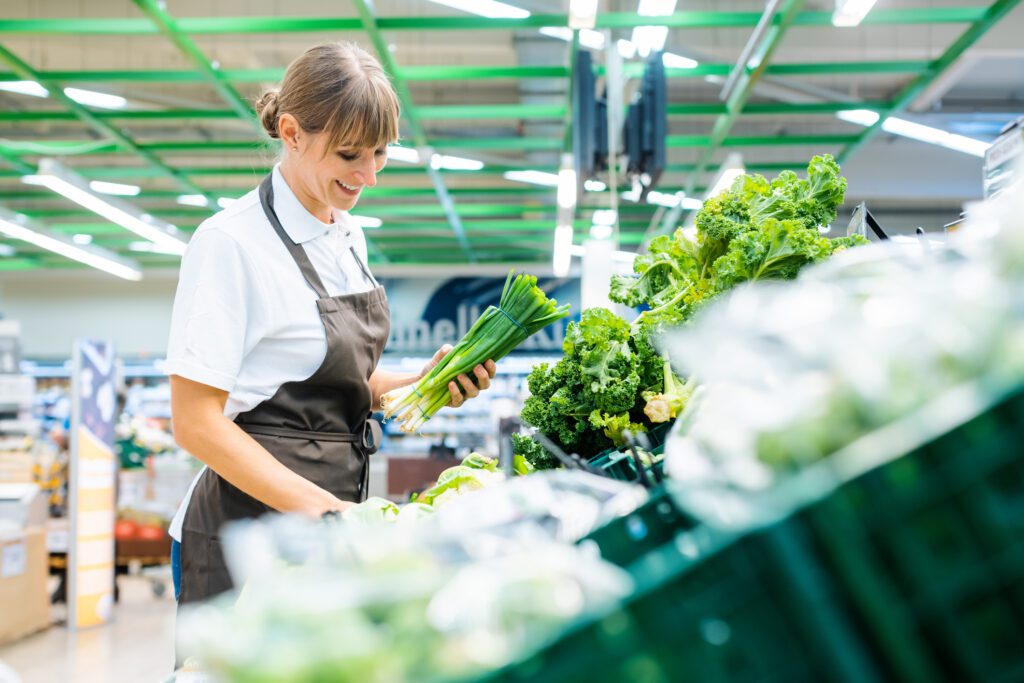
Even as online grocery sales hit new highs, the store is still the heart of the industry.
87% of grocery sales still happen in-store, and omnichannel shoppers spend 1.5 times more than single-channel customers. At the same time, U.S. online grocery sales surged past $10 billion in July 2025—a 26% year-over-year increase—putting enormous pressure on grocers to execute flawlessly across both physical and digital channels.
The leaders who thrive in this environment will be those who turn efficiency into profit while keeping associates engaged and shoppers loyal.
AI-driven efficiency: From prioritization to performance
For grocers, operational efficiency is no longer just about cutting costs. It’s about enabling frontline teams to work smarter in an environment where speed, accuracy, and compliance determine profitability.
Associates juggle a growing list of responsibilities: stocking shelves, executing promotions, maintaining food safety standards, and delivering quality customer interactions. Leaders, meanwhile, must communicate rapidly, ensure consistency across stores, and close performance gaps before they impact shoppers.
The grocers that stand out are the ones who unify these demands into a single system. Training, communication, and task execution can’t operate in silos. Associates need to know what to do, how to do it, and why it matters—delivered in the flow of work and prioritized so the most urgent actions always rise to the top.
Case in point: Kroger’s reimagines grocery training with AI
Kroger’s frontline teams don’t have time to step off the floor for hours of traditional training. To support associates in the flow of work, Kroger introduced an AI-powered platform like Axonify that delivers personalized, gamified learning and communications in short, accessible bursts on any device.
The result: 83% participation and associates logging in twice per week to complete training, read messages, or tackle tasks—proof that AI-driven enablement can boost performance and keep the frontline aligned at scale.
Read Kroger’s success story.
Want to dive deeper into how leading retailers are boosting efficiency without driving up costs?
Check out our guide: Maximize Impact, Minimize Costs. It explores 35 practical ways to reduce wasted effort, stretch labor budgets further and get more value from every associate on the floor.
Shopper-centered experiences: Empowered associates build loyalty
Today’s shoppers expect more than stocked shelves. They want fast service, clean stores and associates who can solve problems with empathy. But delivering consistently on those expectations is only possible when frontline teams have the right support. Associates need knowledge at their fingertips and the confidence that comes from ongoing reinforcement, not one-off training.
Grocers investing in shopper-centered enablement are seeing tangible results. When associates are trained to listen first and respond with solutions, interactions feel authentic and build trust. This translates into stronger loyalty, higher satisfaction, and repeat visits in an increasingly competitive market.
▶️ Grab your copy of the Customer experience strategy: A step-by-step guide
Case in point: Longo’s empowers their frontline with mobile-first training and communications
Longo’s, a premium Canadian grocer, equips its 6,000 team members with mobile-first training and communications that fit directly into the flow of work. Participation has reached 95%, helping associates stay engaged, safe, and ready to serve guests.
The result: a 300% increase in team member Net Promoter Score and turnover reduced from 26% to 19%—proof that empowered associates deliver better shopper experiences.
Read Longo’s success story.
Retail media networks: Execution is everything
Retail media has become one of the fastest-growing revenue streams in grocery, but every dollar depends on flawless in-store execution. If displays aren’t set up or maintained correctly, ad spend is wasted and both retailers and brand partners lose credibility.
To capture this opportunity, grocers need frontline teams who can translate planograms and directives into reality on the floor, quickly and consistently. That requires simple, accessible training paired with clear communication and real-time accountability.
Agility at scale: Navigating labor shortages and market shifts
Labor shortages and high turnover remain some of the biggest disruptors in grocery. At the same time, consumer preferences and economic conditions are changing faster than ever. To succeed, grocers must be able to roll out new initiatives, promotions and compliance protocols across hundreds of stores in days, not weeks.
Agility at scale requires more than sending updates from HQ. It demands clear communication, rapid training and visibility into execution so leaders can identify and close gaps quickly. When associates feel supported with clear direction and the tools to act with confidence, stores adapt faster and mistakes decline.
Case in point: Open lines of communication equal success for SEG’s frontline
Southeastern Grocers (SEG), which operates more than 400 stores and employs 35,000 associates, recently went through a culture transformation that earned them Great Place to Work certification and recognition from Harvard Business School. A big part of that success was keeping their frontline connected with consistent, relevant communication.
“We know that our associates work really hard on the sales floor in our stores, and it can be very challenging to reach them. With Axonify’s broadcast messages, we are able to get in touch with our associates whenever we need, and we can reach every single one of them.”
Claudia Laura, Sr. Manager of Content Design and Development at SEG.
Today, SEG’s associates log into Axonify every shift to complete training, read messages and share feedback. That open channel has fueled a 97% participation rate, a 30% increase in leadership trust and a more engaged workforce ready to adapt to whatever comes next.
Read SEG’s success story
The bottom line: AI as a competitive necessity
The grocery industry in 2025 and beyond is about redefining operational excellence. With AI projected to unlock up to $136 billion in value by 2030, the competitive edge will go to retailers who combine intelligent prioritization with confident, empowered associates.
Frontline enablement is the foundation of this shift. By unifying training, communication and task execution, grocers can achieve consistent execution, reduce costly errors and free up associates to focus on what matters most, creating better shopper experiences.
Retailers like Kroger, Longo’s and SEG are proving the model: higher engagement, safer operations, stronger customer loyalty and measurable business impact. For grocers navigating a market defined by tight margins and rising expectations, AI-powered frontline agility isn’t just an efficiency play. It’s the path to sustainable growth.