Seasonal retail planning guide: Align inventory, promotions & your frontline

Seasonal planning has long focused on demand forecasting, inventory management and promotions. Yet this view leaves a gap. Many strategies stop at merchandise and marketing calendars and overlook the people who deliver the plan on the floor.
In 2025, frontline readiness will matter as much as allocation or markdowns. When teams are agile and prepared, plans move off the page and into action. That consistency drives real results: higher sales, lower costs and reduced risk throughout the holiday season.
In this article, we’ll explore why seasonal planning needs a frontline focus, where common pitfalls lie, the measurable ROI of workforce agility and how leading retailers are building resilience. You’ll also leave with key steps to strengthen your 2025–26 strategy.
Why seasonal planning needs a frontline lens
Seasonal planning has always leaned on the numbers. Forecast demand. Allocate stock. Time promotions. Mark down what doesn’t sell.
That approach still matters, but in 2025 it’s no longer enough as retail faces a tougher reality:
- Labor shortages mean fewer people to do more work.
- High turnover makes it hard to keep teams trained and ready.
- Price-sensitive customers expect flawless execution at every touchpoint.
Even the best forecasts can fail if the frontline isn’t prepared. What makes the difference now is workforce agility.
Can your staff pivot quickly when demand shifts? Do they roll out promotions the same day they launch? Are they delivering a consistent customer experience in every location?
Execution at scale defines success. That requires:
- Fast onboarding so seasonal hires are productive in days, not weeks.
- Clear communication that reaches every associate, every time.
- Safe operations that protect people and keep costs under control.
- Continuous learning in the flow of work so teams stay sharp and confident.
Technology also changes the game. Self-service tools speed up checkout, but they only work if associates are skilled enough to guide customers and solve last-minute problems. This means that training and enablement are no longer HR side projects—they are core to seasonal profitability.
This is where Axonify makes the difference. By combining agile training, real-time communication and in-the-moment support, it ensures frontline teams can execute consistently across locations. The result is fewer delays, stronger compliance, better forecast accuracy and a workforce ready for whatever the seasonal events bring.
Common pitfalls in retail seasonal planning
Retailers often invest heavily in merchandise and marketing but overlook the people and processes that carry plans across the finish line. The result is overstock, missed execution and rising costs that hurt cash flow.
Here are 3 common pitfalls and how to avoid them:
1. Over-investing in merchandise, under-investing in people
Many retailers focus on product calendars but neglect employee readiness. When people aren’t prepared, execution breaks down.
The risks:
- Long ramp times before new hires reach proficiency
- Disengaged seasonal staff who don’t feel supported
- Inconsistent execution that hurts sales and service
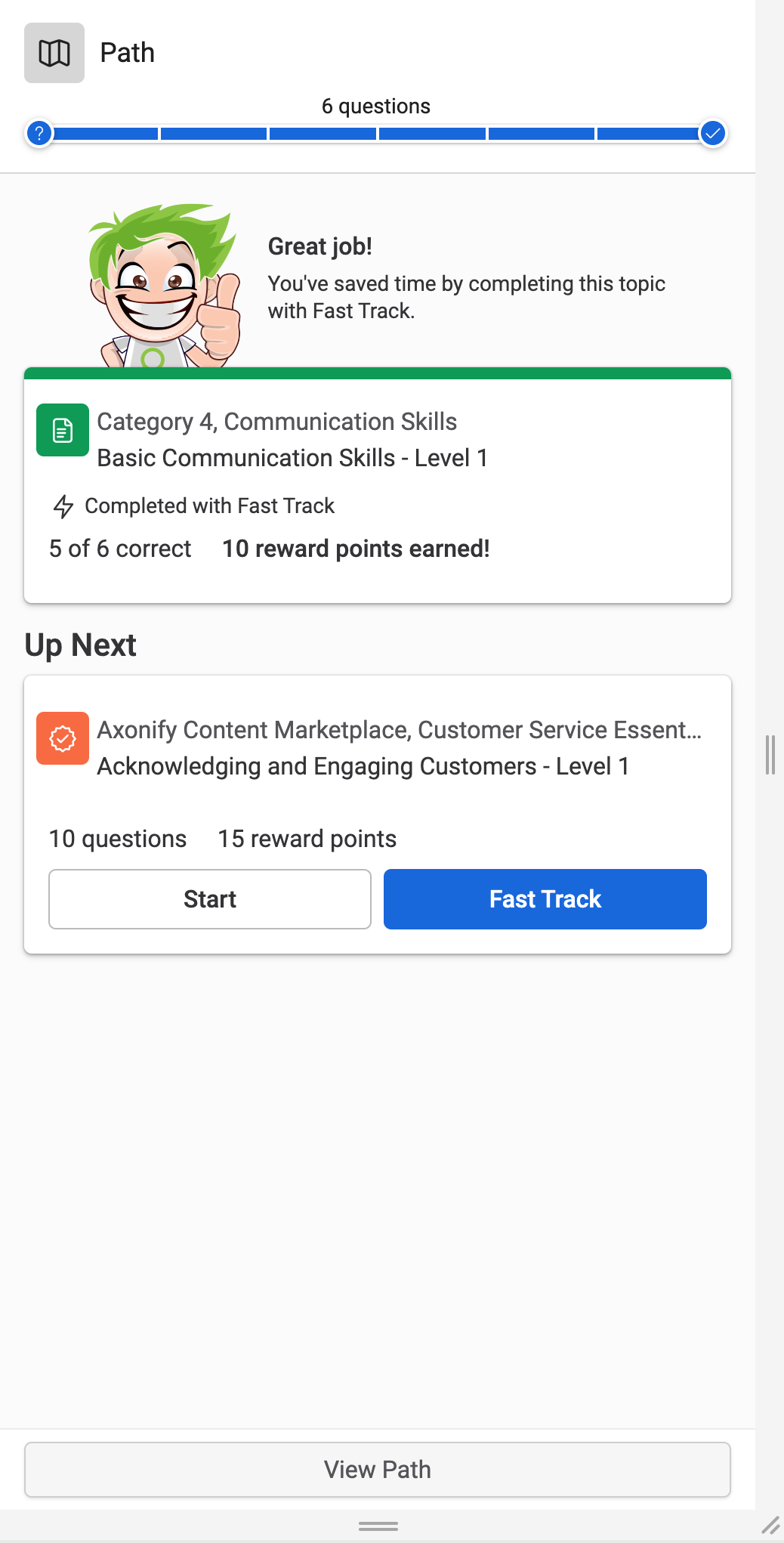
The fix: Fast-track onboarding with Axonify. Fast Track reduces onboarding time by letting seasonal hires skip only the topics where mastery is demonstrable. Many seasonal workers already have industry experience or are hired for limited roles like stocking or cashiering. Fast Track accelerates their readiness by focusing training only where it’s needed. Axonify’s reinforcement method ensures knowledge is continuously refreshed, so associates stay sharp throughout the season.
2. Siloed communication during high-stakes periods
Critical updates often arrive late or inconsistently, leaving frontline teams to fill the gaps. That’s when customer experience and compliance suffer.
The risks:
- Missed execution that leads to poor customer experience
- Compliance gaps that create unnecessary risk
The fix: Use Axonify Communication to cascade updates in real time and ensure every associate gets the same message at the same moment. Pair it with Max so employees can find instant answers on the floor—no delays, no guesswork.
3. Slow and outdated onboarding
Seasonal training often follows the same long playbook as full-time roles. The problem: seasonal staff need to perform in days, not weeks.
The risks:
- Underprepared associates who struggle on the job
- High attrition that wastes recruiting spend
- Poor customer interactions that hurt loyalty
The fix: With Fast Track, onboarding adapts to each associate. Seasonal workers often bring past retail knowledge and don’t need to be trained on everything—just the essentials for their role. Fast Track allows them to prove what they know, skip only where mastery is clear, and then receive reinforcement to keep knowledge fresh.
Wakefern, for example, reduced seat time by 50% while maintaining compliance confidence and keeping staff sharp through every season.
Get your free Frontline Onboarding Checklist
Seasonal success starts with ready people. Cut ramp time, reduce early turnover, and boost CX with a practical, mobile-ready checklist.
Whether you’re hiring for the holiday rush or scaling frontline teams year-round, this handy resource helps new hires get productive—fast.
Building a modern retail seasonal plan
A modern plan blends operational execution with frontline enablement. That balance ensures you stock the right products, reduce replenishment delays, and optimize staff performance during peak seasonality trends.
Pre-season: Equip teams for speed and agility
Before the season starts, retailers focus on forecasting demand and aligning calendars. But if teams aren’t prepared, those plans fall flat.
What matters most:
- Fast onboarding so seasonal hires can contribute in days
- Engaged staff who stay through peak periods
- Strong knowledge on shrink prevention and promo execution
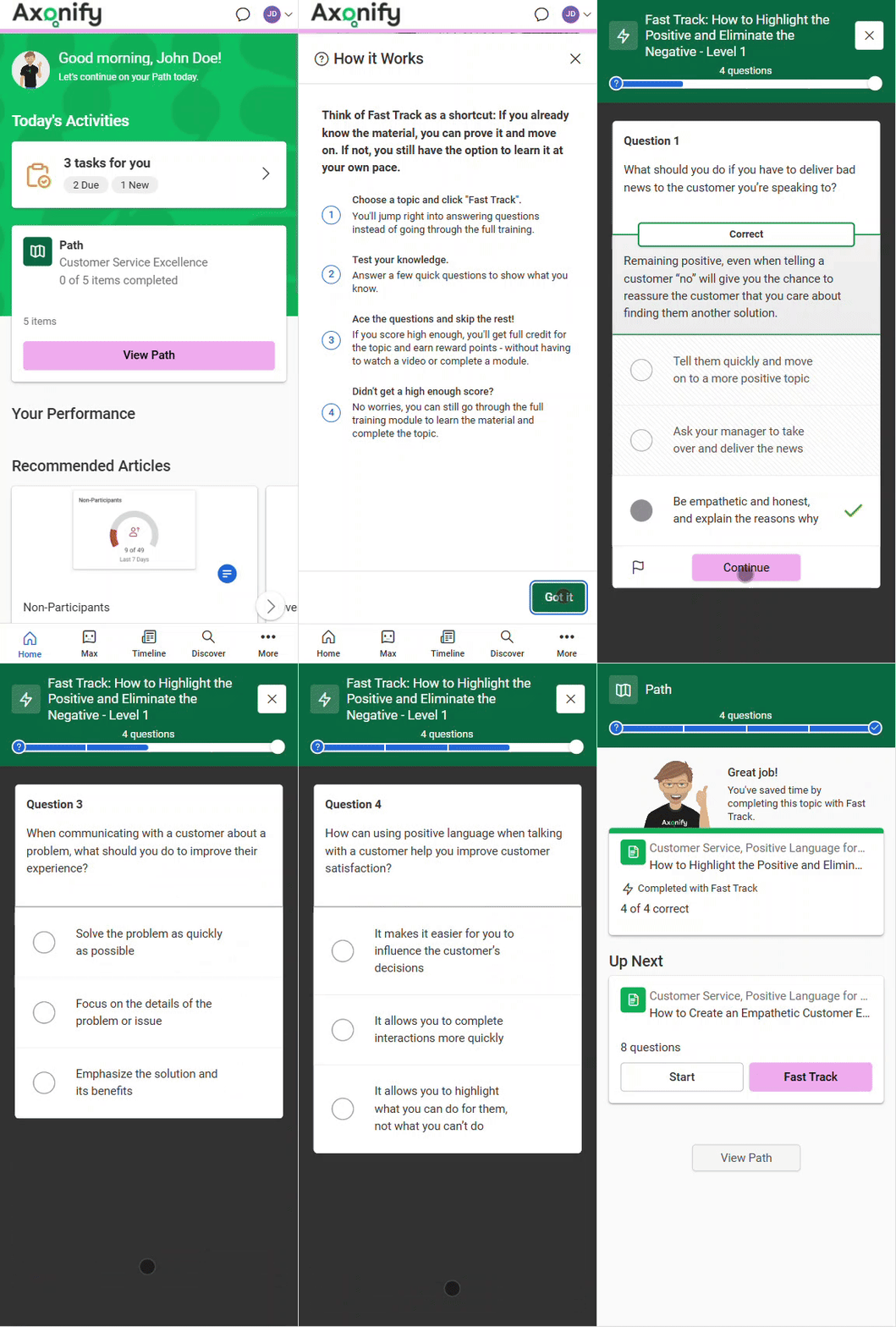
The fix: Axonify’s Fast Track feature accelerates onboarding by meeting seasonal hires where they are. Many already know the basics of retail and are hired for specific tasks, so they don’t need full onboarding. Fast Track lets them prove mastery, skip redundant training and get onto the floor in days, not weeks.
In-season: Keep communication and learning flowing
Once the season is underway, success depends on agility. Stores need to respond to sales trends, rebalanced stock and shifting customer expectations in real time.
The challenges:
- Updates often get stuck in email or spread unevenly
- Associates need answers in the moment, not after a shift
The fix: Axonify Communication ensures updates reach every associate the same day. Max puts instant answers in the flow of work. Together, they reduce errors, avoid last year’s mistakes and keep compliance strong.
The impact? Higher CSAT, faster rollout of initiatives, stronger compliance.
End-of-season: Capture insights for continuous improvement
When the season wraps, retailers focus on markdowns and clearing excess inventory. That’s important, but so is capturing what teams learned.
The opportunity:
- Gather frontline insights on what worked and what didn’t
- Use knowledge data to fine-tune next year’s plan
- Reinforce safety and service standards to lock in progress
Northgate Market cut safety incidents by 68% through reinforced learning. Performance insights now fuel earlier, smarter planning for the new year, ensuring each season builds stronger supply chain resilience.
▶️ Also read: How effective retail task management can maintain operational consistency across stores
The ROI of including frontline proficiency in seasonal planning
Seasonal readiness delivers measurable ROI. Retailers that prepare people as carefully as they plan SKUs see returns across revenue, cost, and risk.
Here’s what it looks like in practice:
Better revenue growth
- Higher conversion rates because staff are ready to engage on day one
- Consistent upselling and cross-selling as training sticks under pressure
Lower costs
- Less overtime as new hires reach proficiency faster
- Lower attrition, reducing expensive recruiting and retraining cycles
- Streamlined scheduling as managers spend less time covering skill gaps
Reduced risk
- Fewer compliance misses with reinforced knowledge
- Reduced safety incidents through continuous microlearning
- Stronger brand reputation through consistent execution across stores
The impact reaches every corner of the business. For Operations, proficiency translates into labor efficiency, faster rollout of promotions, and safer environments. For L&D, it means proven impact on KPIs, clear evidence that training investment drives the bottom line.
And the return compounds. Each season builds on the last when frontline performance data feeds back into planning. Retailers move from firefighting to a continuous improvement loop that pays off year after year.
Real-world examples: How leading retailers win with a frontline-first approach
Frontline-first planning is not theory; it’s proven in practice. Retailers that integrate enablement into seasonal strategies see measurable improvements in revenue, safety, and customer experience.
The following examples show how global leaders have used Axonify to boost performance on the floor and in the field.
Walmart DCs: 54% fewer safety incidents through reinforced seasonal safety programs
At over 16 U.S. distribution centers, Walmart used Axonify to embed short safety microlearning drills into daily routines. The training reinforced compliance, behavior rules and safety awareness. The result? In the pilot of eight Walmart DCs, recordable safety incidents dropped by 54%.
Workers saw the value. Leadership saw cost savings. Walmart expanded the program to over 75,000 associates in 150+ DCs.
Southeastern Grocers: improved culture and leadership trust during transformation
Southeastern Grocers, with more than 400 stores and 35,000 associates, turned to Axonify to reimagine how training and communication worked on the front line.
Microlearning replaced long courses with daily bursts that fit into busy shifts. Over time the program expanded to cover hundreds of topics and reached almost every associate.
Participation climbed to over 95% and knowledge scores improved across the workforce. Just as important, Axonify became a two-way communication channel, helping leaders listen and respond in real time. The impact went beyond performance metrics—leadership trust scores rose from 59% to 89%, signaling a stronger culture and more connected workforce.
Apparel Group: Revenue & productivity gains through frontline enablement
The Apparel Group, which operates more than 2,000 stores representing over 80 brands across 14 countries, used Axonify to overhaul its onboarding and training.
Results included:
- 8% increase in sales for the Skechers brand
- 20% boost in productivity across all brands
- Knowledge growth from ~67% to ~80% after training
- Engagement rate of ~91% through daily learning and extra training sessions
These outcomes highlight the real ROI of frontline enablement: better trained employees who drive sales, stay safer on the job and deliver a consistent experience to customers.
Key takeaways for retail leaders planning 2025-26 seasons
Seasonal success depends on more than sharp forecasts or promotional timing. Retailers who prioritize frontline readiness are the ones who consistently outperform during high-stakes periods. Going into 2025–26, the winners will be those who treat frontline enablement as a core driver of agility and execution.
What leaders should keep in mind:
- Plan beyond products. Equip your people with the skills and confidence to sell, serve and execute at scale.
- Think year-round agility. Seasonal readiness starts long before the rush—reinforce knowledge and communication daily.
- Unite Operations and L&D. Strong partnerships between these functions ensure faster ramp-up, smoother rollouts and consistent compliance.
- Leverage data-driven tools. Platforms like Axonify make it possible to measure, adapt and continuously improve frontline performance.
Retailers who put people first in seasonal planning aren’t just preparing for the holiday rush. They build resilience that carries well beyond peak season. With strong operations and empowered frontlines, 2025–26 can set the stage for lasting growth and a clear competitive edge.